
Last updated November 15, 2026
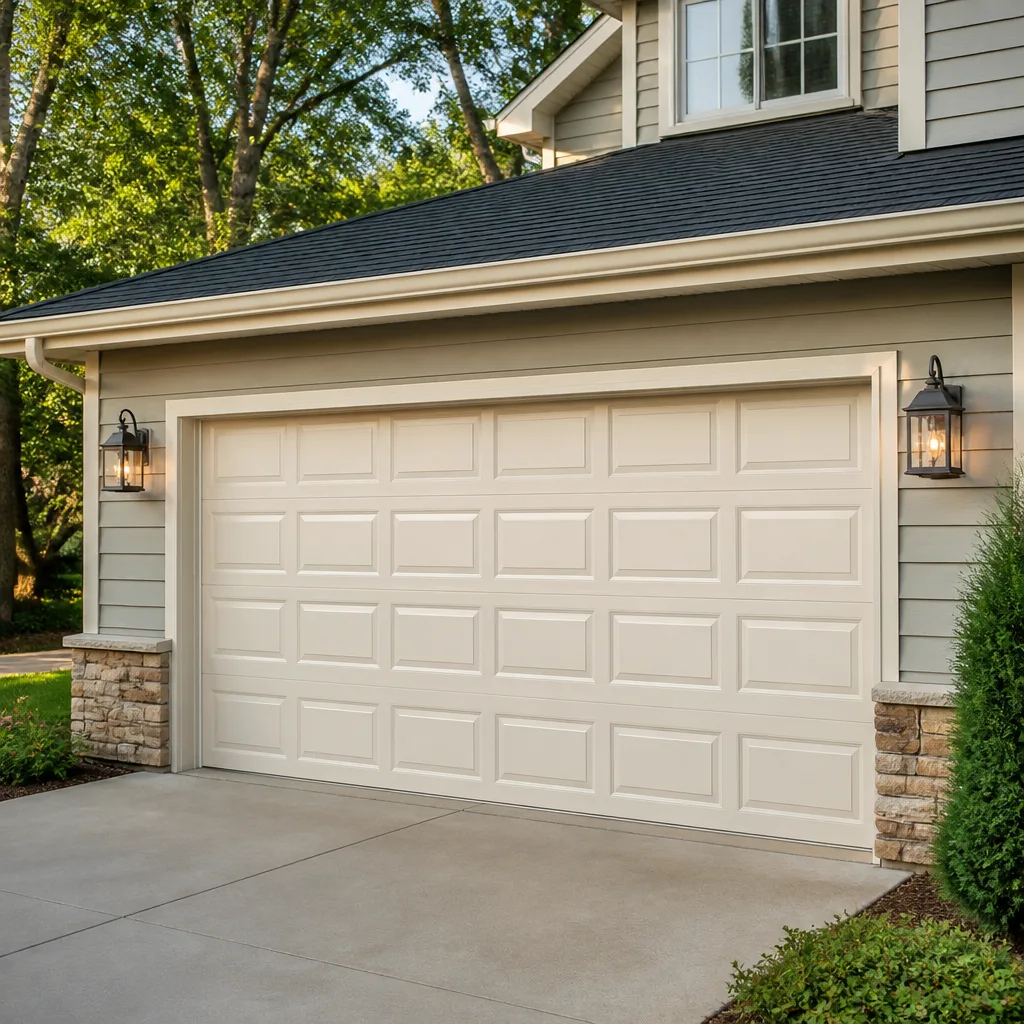 Raised-panel steel
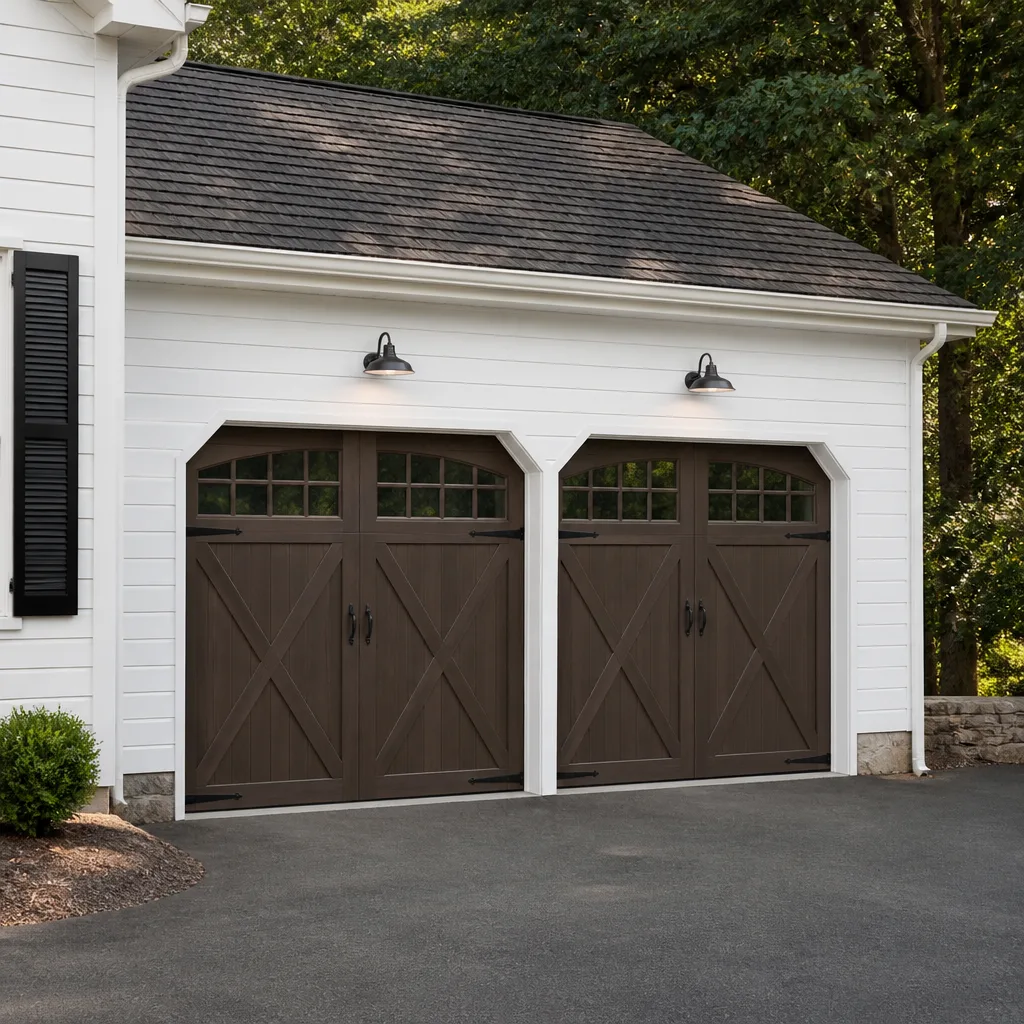 Carriage house
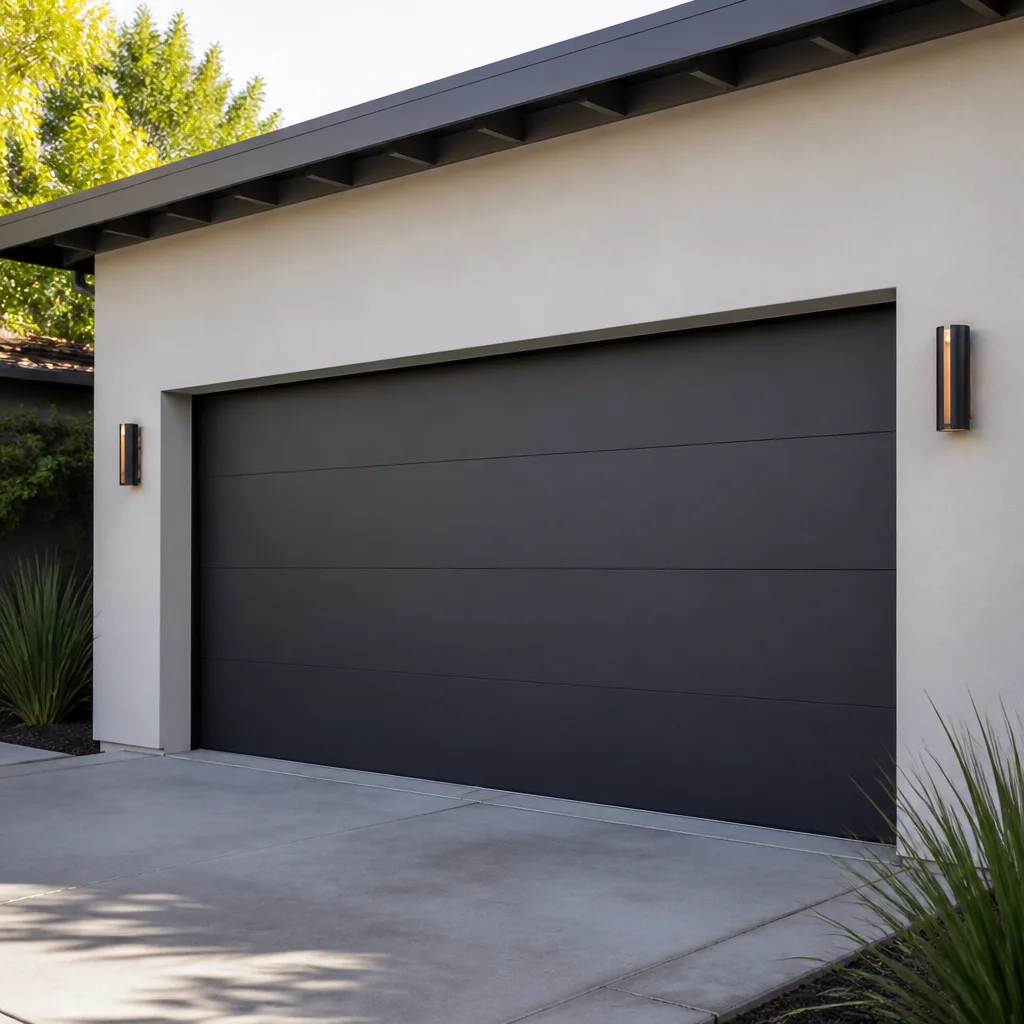 Modern flush
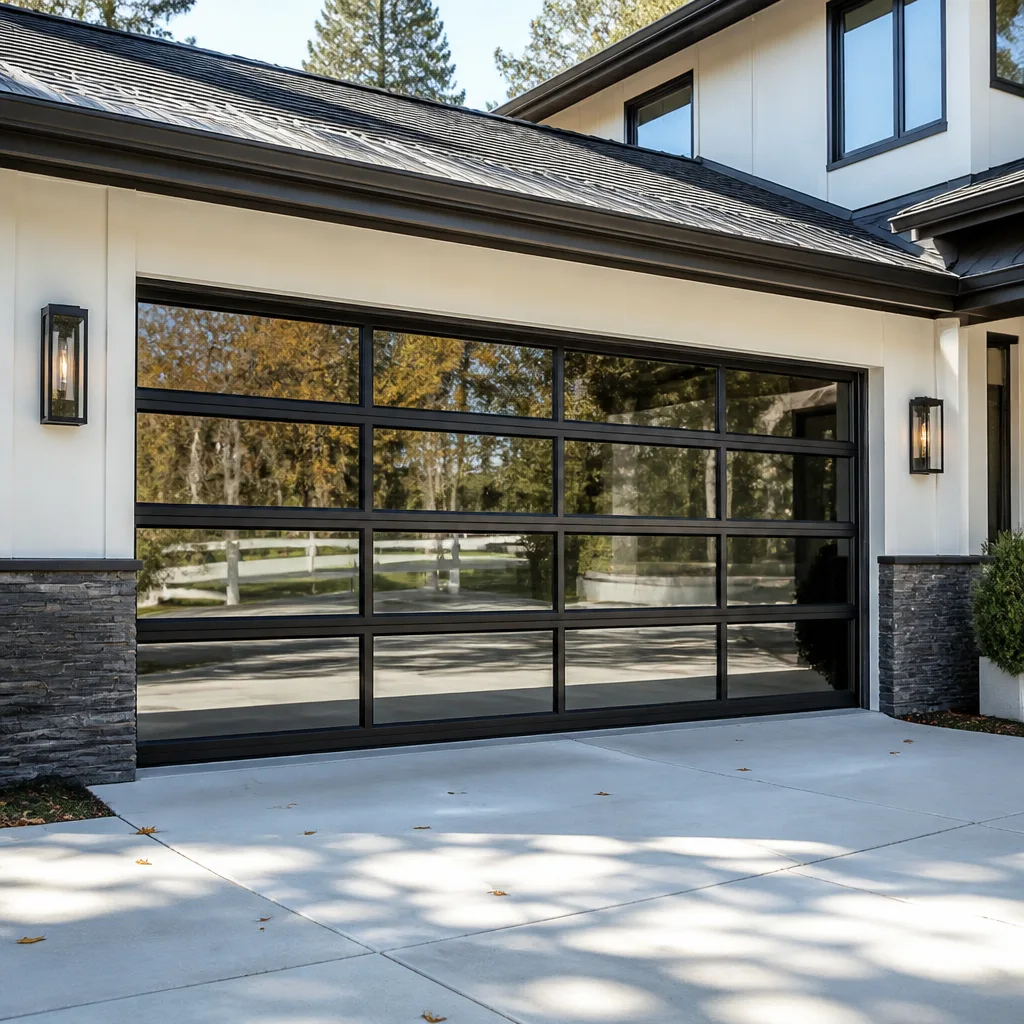 Full-view glass
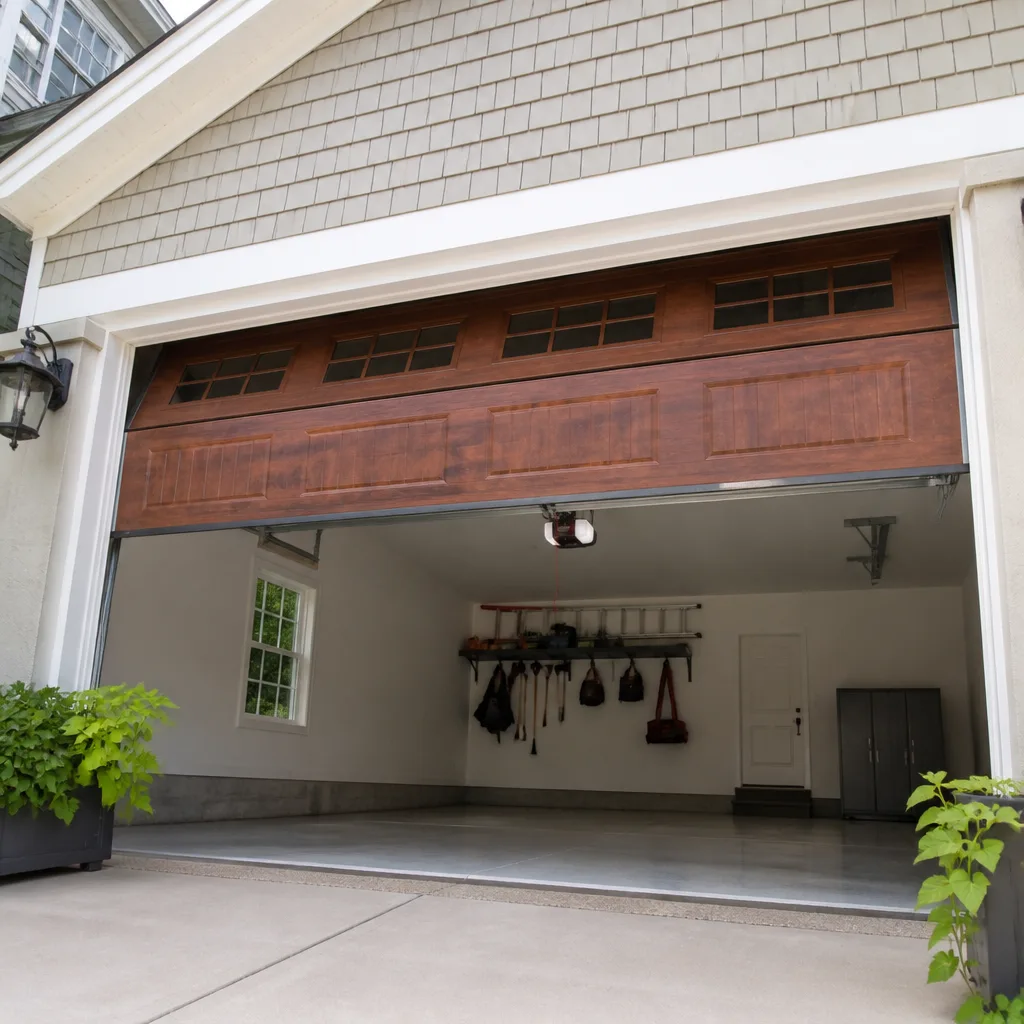 LiftMaster openers
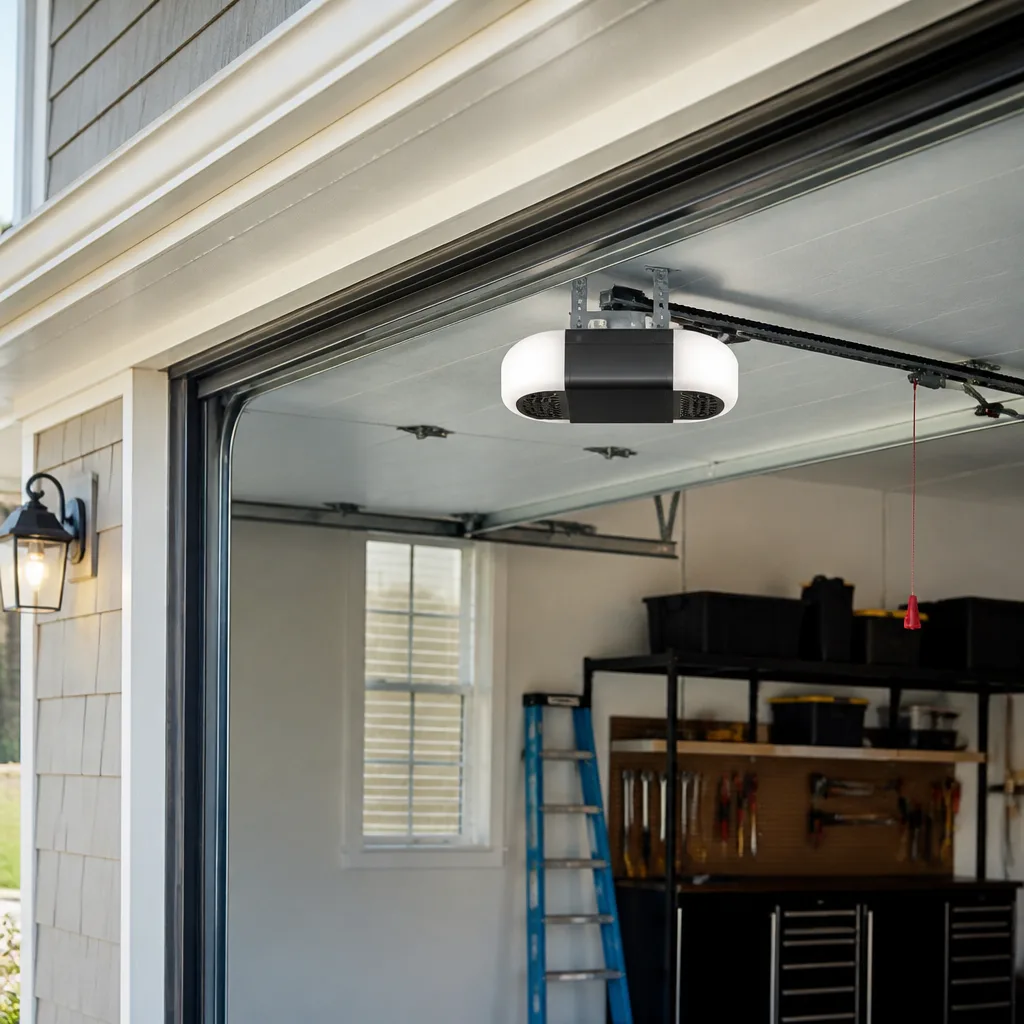 Chamberlain openers
Full 25-point door and opener safety check with every visit - springs, cables, rollers, tracks, and your LiftMaster or Chamberlain opener included
You get a price before we start. It does not change when the pro arrives.
Get your free estimateThe Complete Guide to Garage Doors in Jersey City
Most Jersey City homeowners discover their garage opening is non-standard only after they’ve already bought a door, because whoever measured it was quoting, not engineering. A rowhouse bay off a narrow side street and a converted multi-family carriage house don’t share dimensions with the suburban two-car garage the catalogs were written for. This guide maps the door types, opener classes, and access constraints that actually show up in Jersey City, so you can measure, choose, and budget before you sign anything. We’ll cover widths, headroom, materials, building rules, and when a repair makes more sense than a replacement.
Quick Answer
Garage doors in Jersey City rarely follow suburban standards: expect narrower rowhouse and brownstone openings, low-headroom ceilings above converted carriage houses, and building-management rules on aesthetics in newer developments. The right door is the one measured against your actual opening and headroom, not the closest catalog size. For most failures, repair comes before replacement, and a written estimate should tell you which one you’re facing before any work begins.
Styles & brands we work with
- Raised-panel steel
- Carriage house
- Modern flush
- Full-view glass
- LiftMaster openers
- Chamberlain openers
Table of Contents
- How Jersey City’s Housing Stock Shapes Your Garage Door
- Rowhouse and Brownstone Garage Widths: What Actually Fits
- Low-Headroom Garages and Opener Clearance
- Door Materials for Hudson County Humidity
- HOA and Building Management Rules in Newer Developments
- Why Converted Multi-Family Garages Need Custom Tracks
- Choosing an Opener: Brands and What Fits Your Setup
- Repair or Replace? A Decision Framework
- What Garage Door Work Typically Costs in Jersey City
How Jersey City’s Housing Stock Shapes Your Garage Door
Jersey City’s garages are a byproduct of its building history, not a design afterthought. The neighborhoods you find here each produce a different garage problem. In Paulus Hook and Hamilton Park, rowhouses were built with carriage-house openings at the rear or in a shared alley, sized for a horse cart and a hand-operated door, not a modern sectional. Along the Bergen-Lafayette and McGinley Square blocks, converted multi-families turned those carriage houses into parking for one or two cars, often with the original beam structure intact. In Journal Square and the Heights, older two- and three-family homes have detached or semi-detached garages added in the mid-twentieth century, usually with lower ceilings than today’s building code would require. And in the newer high-rise-adjacent townhome clusters around Newport and Liberty Harbor, you get purpose-built garages that look standard but sit under strict building-management rules.
What this means in practice: the “standard” 16-by-7-foot double door and 9-by-7-foot single door that most catalogs lead with don’t map cleanly onto Jersey City stock. A brownstone rear bay is often 8 feet wide, sometimes less. A converted carriage house may have a 7-foot ceiling with a structural beam crossing it at 6 feet 4 inches. None of that is unusual here, and all of it is fixable, but only if the person who measures understands what they’re looking at. Our garage door repair work in Jersey City starts with the opening, not the door.
- Rowhouse and brownstone: narrow carriage-house bays, often 7 to 9 feet wide, sometimes with an arched or recessed header.
- Converted multi-family: original timber beam ceilings, tight headroom, shared access lanes.
- Mid-century detached garages: closer to standard width, but with lower ceilings than modern construction.
- Newer townhome clusters: standard dimensions with building-management aesthetic rules.
Rowhouse and Brownstone Garage Widths: What Actually Fits
A rowhouse or brownstone garage opening in Jersey City commonly measures between 7 and 9 feet wide and 6 feet 6 inches to 7 feet tall, which is meaningfully smaller than the 9-by-7 single door most manufacturers stock as their base size. That difference decides your entire door selection. A standard sectional comes in fixed widths, so a non-standard opening either needs a slightly narrower custom panel set or a sectional built to size. You have more flexibility with a roll-up door, which can be trimmed in width, or with a carriage-style swing or tilt door, which is fabricated to measurement rather than picked from a stock list.
For brownstone rears and historic-facing openings, many Jersey City owners want a door that reads as original: a wood-look carriage style with vertical stiles or a recessed panel pattern. Clopay’s carriage-house lines and Amarr’s traditional raised-panel doors both offer patterns that fit that look without requiring genuine timber, which matters because solid wood demands more maintenance in this climate than most owners want. What you give up with a non-standard width is off-the-shelf price and same-week availability; what you keep is a door that actually closes without gaps at the jambs.
Three measurements decide the fit:
- Finished opening width and height. Measure between the jambs and from the floor to the header, not to the trim.
- Side clearance. How much room sits outside the opening on each side for the track and springs.
- Header space and ceiling height. The distance from the top of the opening to the ceiling, plus any beams crossing it.
Get those three right and the style conversation becomes easy. Get them wrong and you’re the homeowner in the hook, holding a door that doesn’t fit. A proper measure takes minutes and saves weeks.
Low-Headroom Garages and Opener Clearance
Headroom is the constraint Jersey City owners underrate most. A standard sectional door needs roughly 12 inches of ceiling space above the opening for the horizontal tracks and the torsion system, and a standard ceiling-mounted opener adds several more inches of drop below that. In converted carriage houses around Bergen-Lafayette or older detached garages in the Heights, you often have 7 feet of ceiling and a beam cutting across at 6 feet 4 inches. A standard setup won’t fit, and a well-meaning installer who forces it ends up with a door that binds, a motor that strains, or tracks that catch the door halfway up.
The fixes are specific, not improvised:
- Low-headroom track kits drop the horizontal track closer to the door and let a sectional operate with less ceiling clearance.
- High-lift track runs the door up higher before it turns, useful where a beam is close to the header.
- Jackshaft or side-mount openers mount on the wall beside the torsion bar instead of hanging from the ceiling, eliminating the overhead drop entirely.
- Torsion-to-extension conversion (or the reverse) changes where the springs sit and how much side clearance they need.
LiftMaster and Genie both make side-mount openers designed for exactly this, and a ceiling-mounted unit from either brand can work if the geometry allows. The point is that headroom is measured, not guessed. Our garage door opener repair calls in Jersey City frequently turn into geometry conversations before they turn into part swaps, because the opener isn’t the problem; the ceiling is.
Door Materials for Hudson County Humidity
Summers in Jersey City run humid, and a garage door faces that humidity on both sides, from the outside air and from the temperature swing between a heated house and a cold concrete slab. Steel doors with a factory finish handle it well, which is why they dominate the market and why Clopay and Amarr both build their residential lines around it. The failure point isn’t the steel; it’s the bottom section, where a steel door without a rust-resistant bottom panel or a properly draining threshold starts to corrode after a few winters of road salt tracking in from the alley.
Wood-look composite and aluminum carriage doors are the other common choice in Jersey City, often chosen to match brownstone facades. They hold up better than solid wood because they don’t absorb moisture the way timber does, though the finish still needs attention. Solid wood remains an option for historic-facing openings, but it demands annual inspection in this climate, and most owners who want the look are better served by a composite that mimics it.
What to check on any material:
- Bottom seal and threshold. Look for a bottom section with a rust-resistant coating and a threshold that drains water away from the slab.
- Hardware finish. Galvanized or coated hinges and rollers outlast bare steel in humid conditions.
- Panel core. Insulated panels resist condensation on the inside face; uninsulated steel can sweat.
- Finish warranty terms. Ask what the manufacturer covers on the finish, not just the structure.
A door that fits the opening and handles the humidity is the goal. Neither part is expensive to get right at the point of purchase and both are costly to fix later.
HOA and Building Management Rules in Newer Developments
In the newer townhome clusters around Newport, Liberty Harbor, and the Paulus Hook waterfront, the garage door is often governed by building management before it’s governed by your taste. Those developments frequently restrict door color, panel style, window presence, and sometimes the whole door model, to keep facades uniform. Before you order anything in one of these buildings, get the current rules in writing from your building management, not from a neighbor’s memory of what was allowed a few years ago.
The rules usually fall into a few categories:
- Aesthetic restrictions. Specified colors and panel styles, sometimes a required manufacturer or model line.
- Installation rules. Noise windows, access through shared driveways, or protection of common surfaces during work.
- Documentation requirements. Some buildings ask for a copy of the manufacturer’s spec or a contractor’s insurance certificate before work is scheduled.
None of that is unusual, and it’s manageable if you plan for it. What causes problems is ordering a door, then discovering it doesn’t match the building’s palette, then trying to return a custom-sized panel set. In a development where the rules are strict, a repair that keeps the existing door can be the simpler path, and it’s often the correct one anyway. If you’re not sure whether your building has restrictions, ask building management first; in Jersey City, the answer varies development by development.
Why Converted Multi-Family Garages Need Custom Tracks
A converted carriage house that now parks two cars was never designed for two modern vehicles plus the hardware to move two doors. When a Jersey City multi-family converts that space, the result is often two side-by-side openings with almost no pier between them, or one wide opening that needs a pair of doors meeting in the middle. Off-the-shelf tracks assume a standard pier width and a clean rectangular opening. Neither assumption survives contact with a 1920s carriage-house frame.
The custom work usually involves:
- Narrowed or offset tracks to fit between structural posts that can’t move.
- Independent torsion systems per door, so one failing spring doesn’t take out both.
- Custom radius track where the ceiling steps down partway back, common in garages built under a rear room addition.
- Reinforced headers where an original timber beam has sagged and the opening is no longer square.
Our technicians, who have up to 11 years of experience, treat a converted multi-family garage as a set of measurements rather than a product number. Wayne Dalton and Craftsman hardware can be specified in configurations that fit most of these spaces, but the track and spring layout is designed per job. That’s the difference between a door that operates for years and one that’s re-adjusted every season. If you’re working through this in a Jersey City converted building, Jasper Garage Door Repair handles both the door and the opener so the geometry and the drive system are solved together.
Choosing an Opener: Brands and What Fits Your Setup
An opener is the part most Jersey City homeowners replace first when a door starts misbehaving, and it’s usually the wrong first move. If a door is heavy, binding, or slow to close, the opener is complaining about a mechanical problem the door has, not the other way around. We see this pattern in Jersey City often enough that we diagnose the door before we look at the motor. Once the door is known to be sound, the opener choice becomes straightforward.
What decides the fit:
- Headroom. Ceiling-mount units need the drop; low-headroom spaces need a side-mount.
- Door type. Sectional doors and carriage tilt doors need different mounting and sometimes different travel.
- Existing brand compatibility. If your remotes and keypad are LiftMaster or Genie, staying in that family keeps them working.
- Drive type. Belt drives run quieter than chain drives, which matters in townhomes with a bedroom above the garage.
- Safety features. Every modern opener needs a functioning photo-eye and a pressure-safety reverse. That’s non-negotiable, and we test both before we call a job done.
LiftMaster, Chamberlain, and Genie cover most residential setups, and Craftsman units use much of the same underlying hardware. We work with all three families and match the unit to the door and ceiling you actually have, not to whichever model happens to be on the shelf. That’s the “built for the brand you already have” approach, and it’s usually cheaper than a full swap. If your opener is failing, the conversation starts with the door.
Repair or Replace? A Decision Framework
Replacement is the last resort, not the default, and Jersey City owners are told otherwise more often than they should be. A door that won’t open is not a door that needs replacing. A door that’s rusted through the bottom section, has a bent track after a vehicle strike, and has a failing opener is a different conversation. The framework below is the one we use.
- Isolate the failure. Door, opener, or both. A door that lifts freely by hand has a door problem; one that’s stiff has a mechanical issue regardless of the motor.
- Check the spring system. Broken torsion springs and snapped extension springs are the single most common cause of a door that won’t open. That’s a repair, not a replacement.
- Inspect the door panels and tracks. Bent tracks can usually be straightened or replaced. Dented panels can sometimes be swapped without replacing the whole door.
- Check the opener and safety sensors. A misaligned photo-eye or a failing logic board is a repair. A motor that’s failed on an otherwise sound door is a swap.
- Weigh age and structural damage. A door with rusted-through panels, a failing bottom section, or delamination across most of the surface is a replacement candidate. Otherwise, repair.
Springs and cables are the part of this list you should never touch yourself. Torsion springs, in particular, are under high tension and can cause serious injury if handled without the right tools and training. If a spring is the problem, call a trained professional. The same goes for anything involving the electrical panel that feeds the opener. Know before you replace, and know what you’re looking at before you decide.
What Garage Door Work Typically Costs in Jersey City
Actual pricing for garage door work in Jersey City varies by opening size, door type, brand, and whether the job is a repair or a replacement. A written estimate sets the final price, and it’s quoted and agreed before any work starts. The ranges below are typical estimates for planning purposes, not quotes.
- Broken torsion spring (one spring): typically $180 to $340. A matched pair is usually replaced together and runs about twice that.
- Extension spring replacement: typically $140 to $260 per spring.
- Opener repair (board, sensor, or travel adjustment): typically $120 to $260.
- Opener replacement (unit and install): typically $280 to $650 depending on drive type and door weight.
- Track straightening or replacement (single door): typically $150 to $350.
- Bottom section replacement (single door): typically $220 to $480 depending on panel and color.
- New single door (installed, standard width): typically $900 to $1,800 depending on material and brand.
- New double door or custom-width door (installed): typically $1,800 to $4,200 depending on size and spec.
For a non-standard Jersey City opening, the door range moves upward, because a custom-sized door is built to measurement rather than picked from stock. Expect the measure and the written quote to come before the order, never after. Call (855) 754-6007 for an exact quote; estimates are free.
Common Mistakes to Avoid
- Buying a door before measuring the opening. In Jersey City rowhouses and brownstones, standard widths often don’t fit. Measure between the jambs and from floor to header first, then choose.
- Ignoring headroom. A standard ceiling-mount opener won’t fit a low-headroom converted garage. Check the beam height before you commit to an opener model.
- Replacing the door when the opener is the problem. A straining motor usually means a binding door. Diagnose the door first, and know before you replace.
- Choosing a material for looks only. In this humidity, the bottom section and threshold decide whether a steel door lasts. Look at the seal and drain before the finish.
- Ordering without checking building rules. In newer Jersey City townhome developments, building management may specify the door color or model. Get the rules in writing before you order.
- Assuming off-the-shelf tracks fit a converted multi-family. Shared piers, stepped ceilings, and out-of-square openings need custom track and spring layouts designed per job.
- Touching the springs. Torsion springs and cables are high-tension components. Never adjust, remove, or tension them yourself; call a trained professional.
See the difference
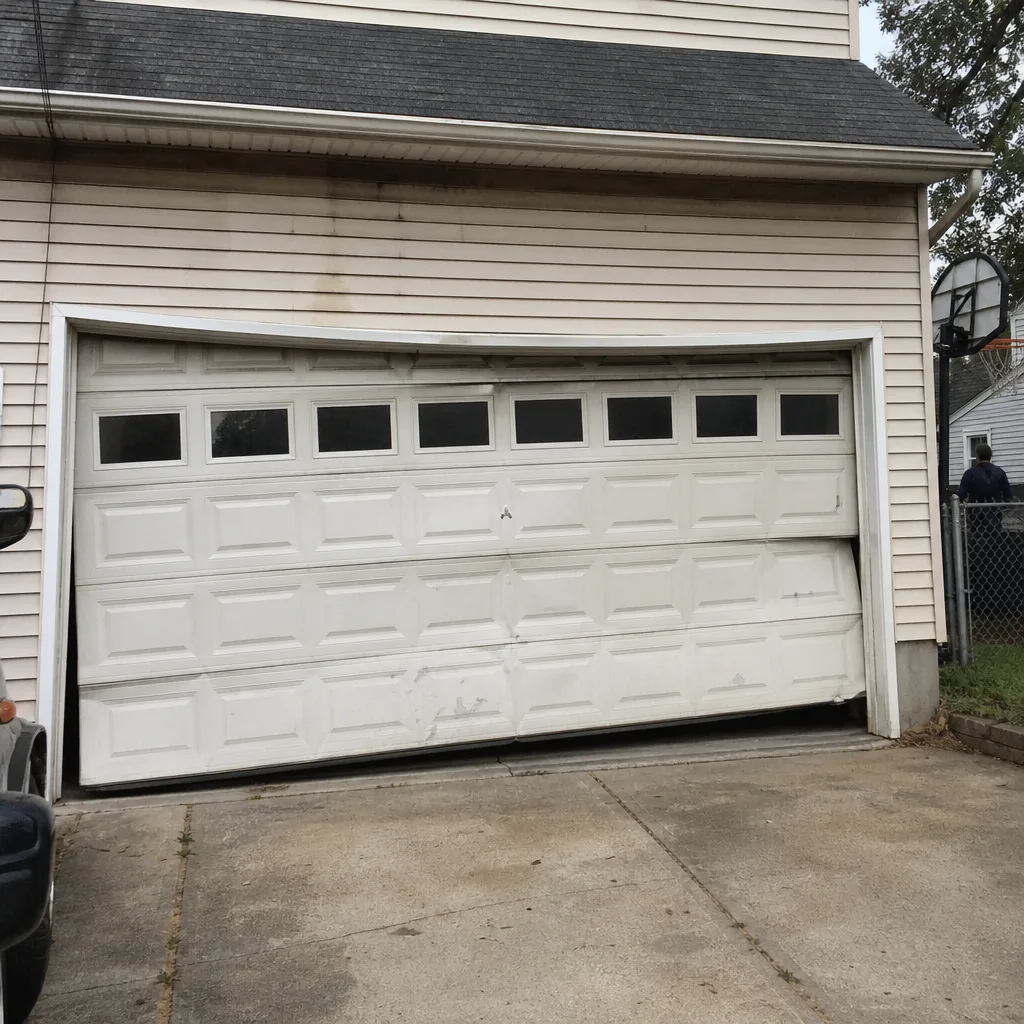 Before
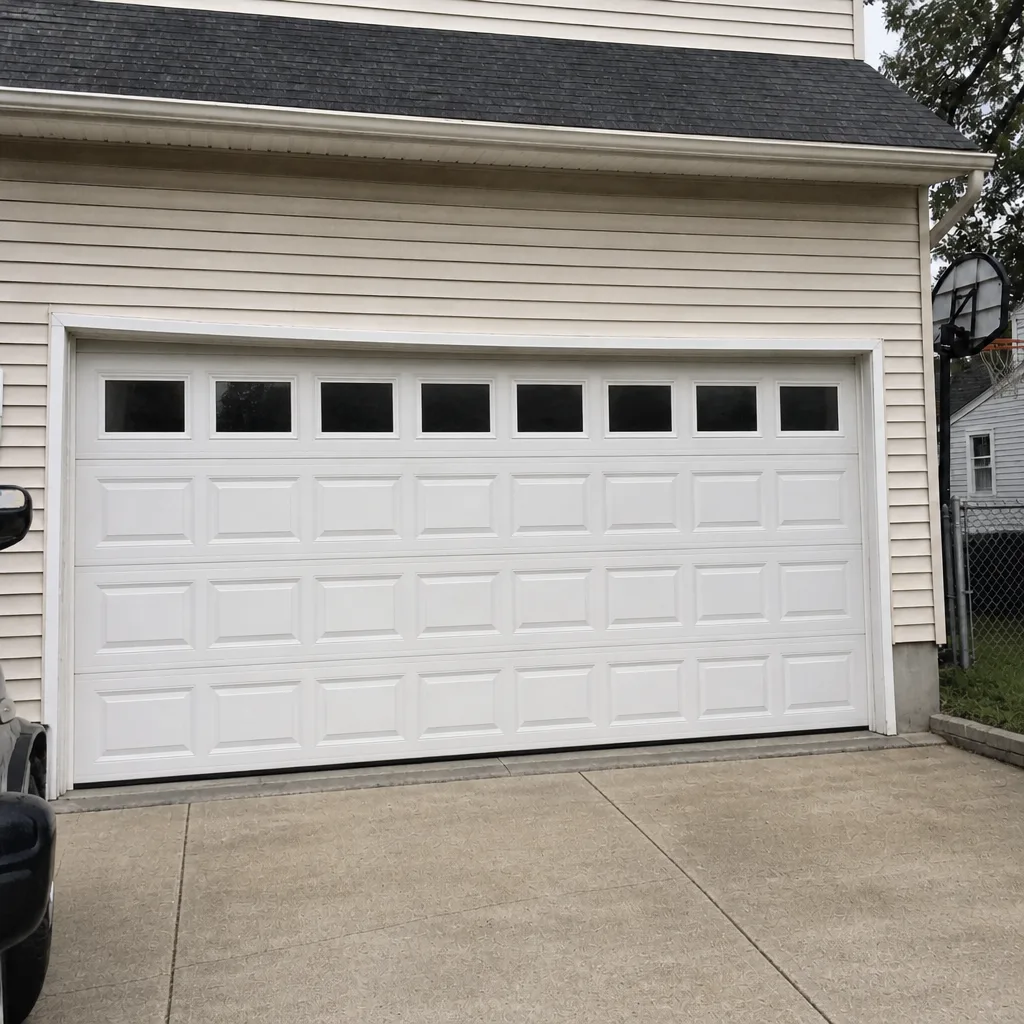 After
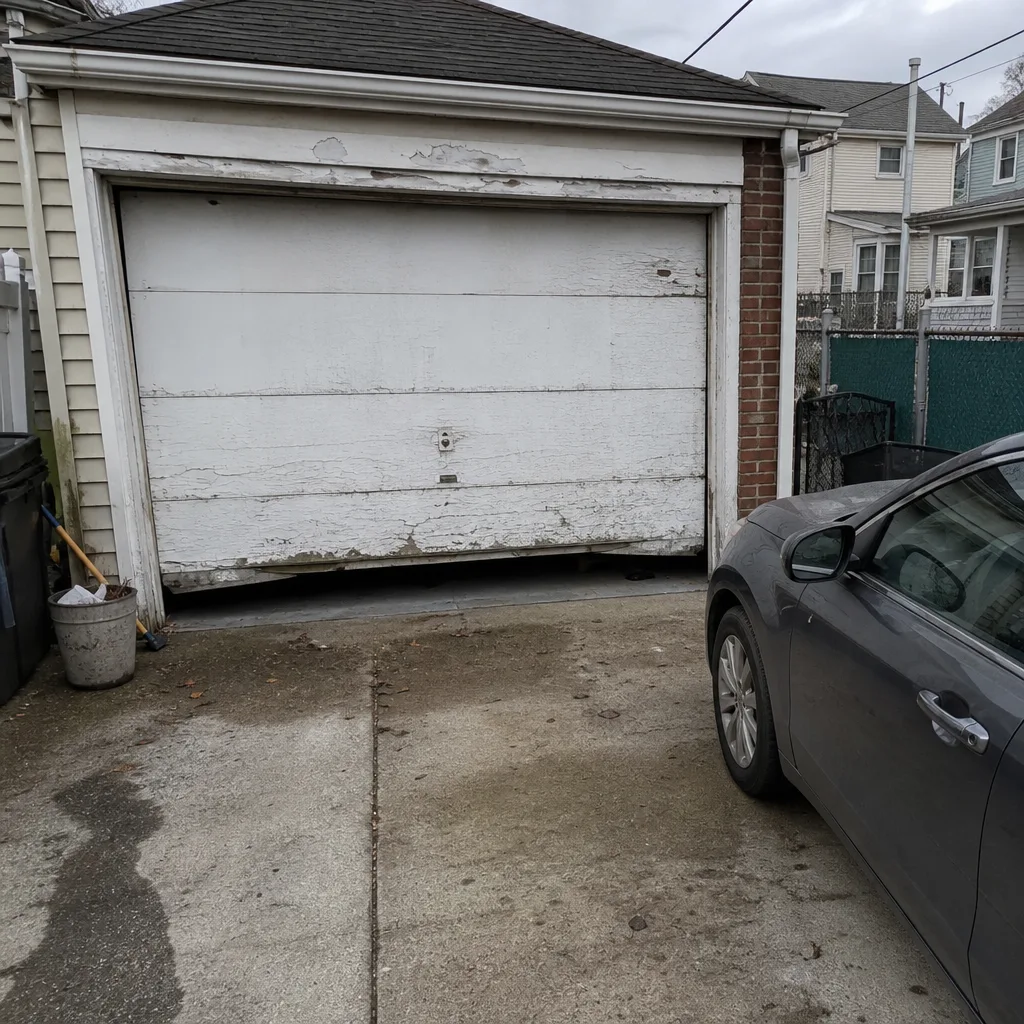 Before
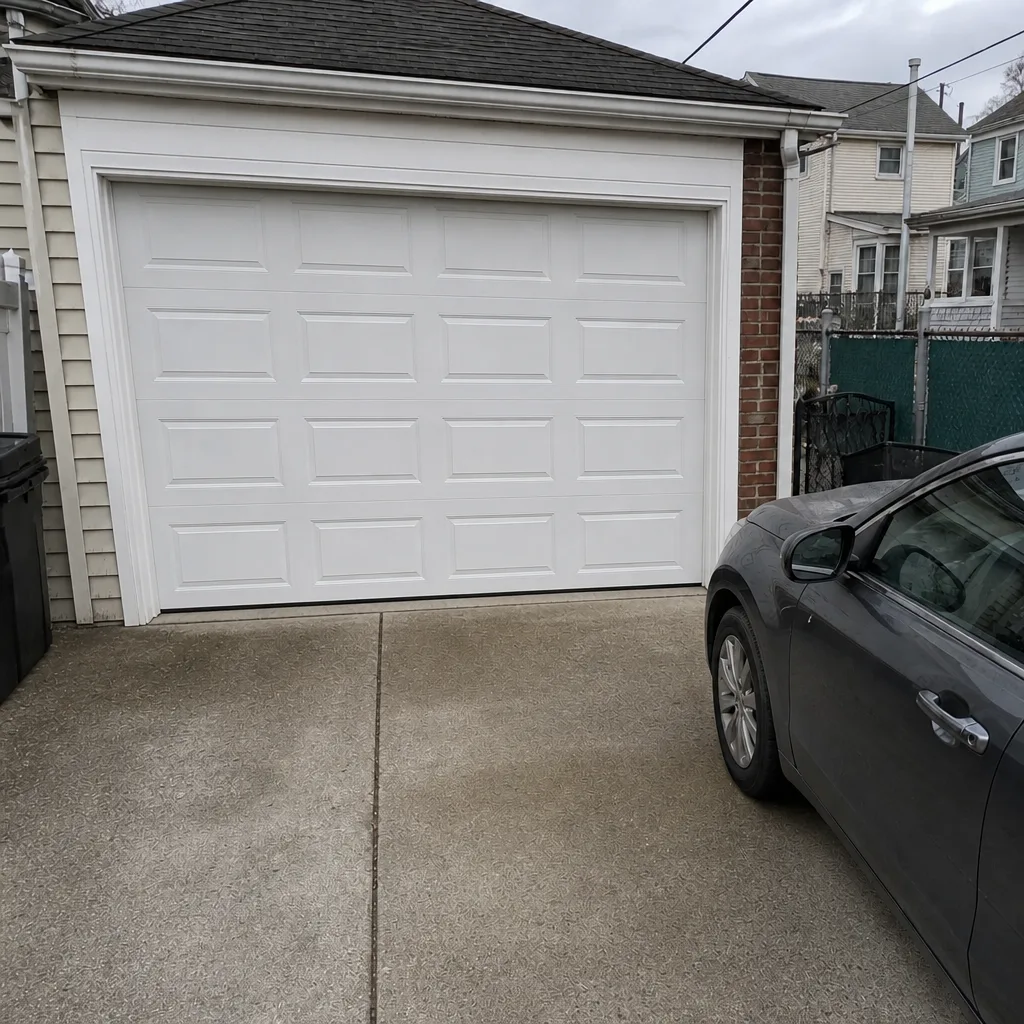 After
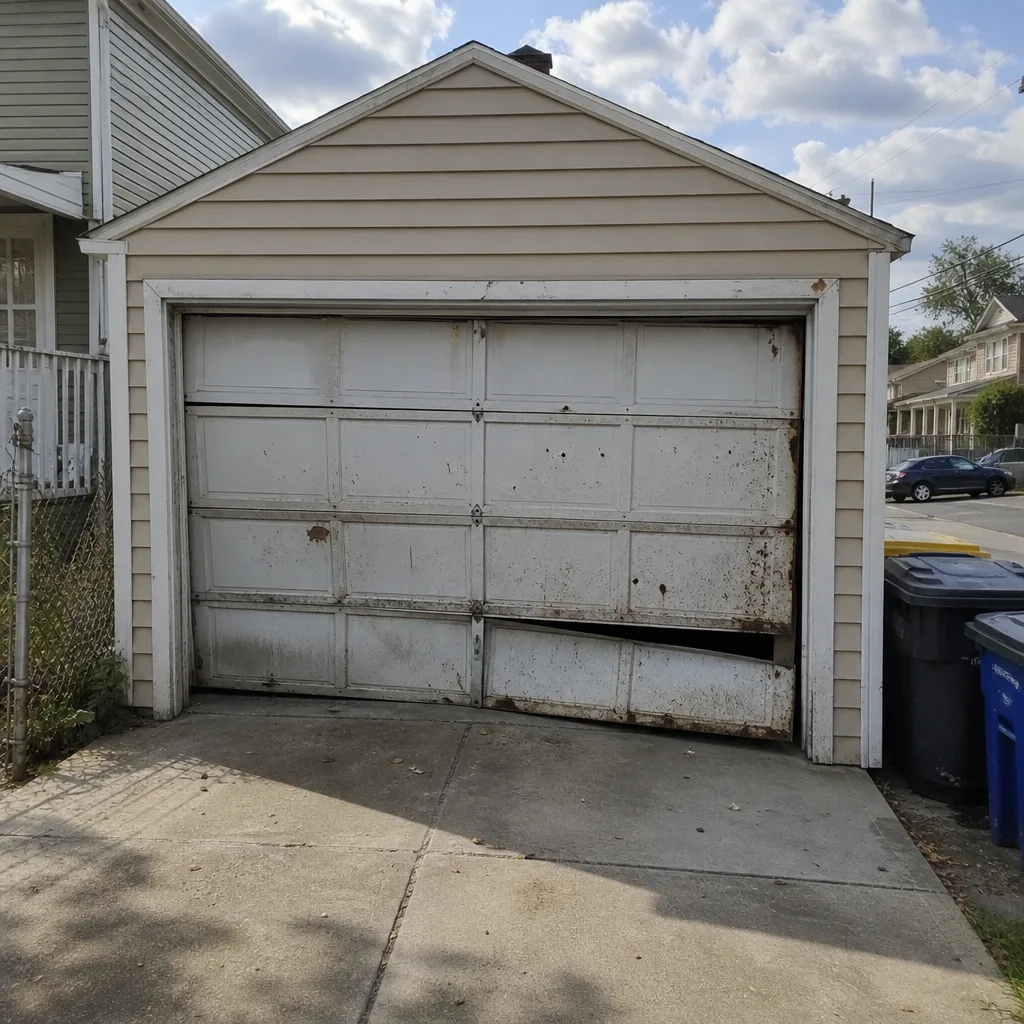 Before
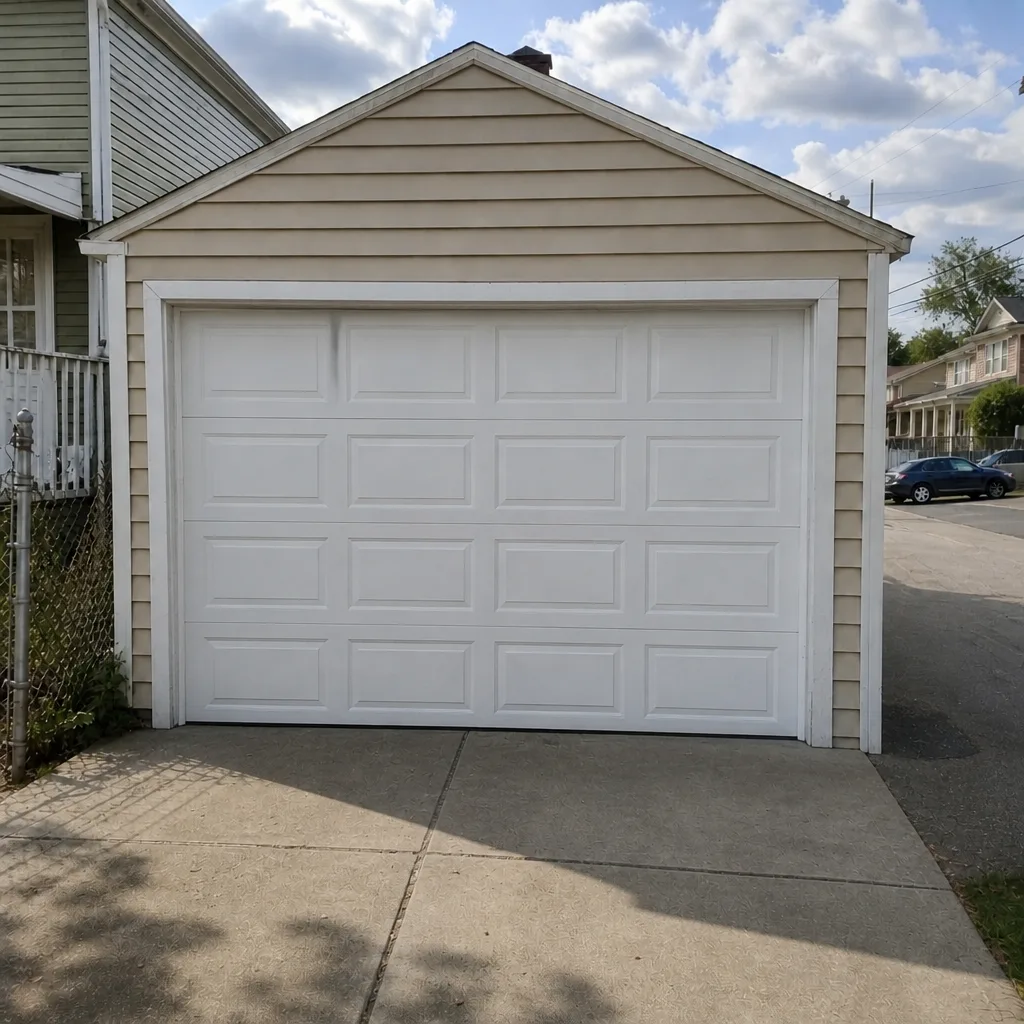 After
When to Call a Professional
Call a professional when a door won’t open or close, when a spring has snapped, when a cable is loose or frayed, when the door comes down unevenly, or when the opener runs but the door doesn’t move. Call if the door has been struck and the track is bent, or if the door is binding at a specific point in its travel, which usually points to a track or roller problem rather than the motor. Call before you order any replacement door if your opening is non-standard, which in Jersey City is more often than you’d expect. Call before you handle a torsion spring, period. Jasper Garage Door Repair offers free estimates in Jersey City, and we cover both the door and the opener in one visit so the diagnosis is complete. Call (855) 754-6007. We answer 24/7. Fast dispatch from 7am to 7pm, Sunday through Friday.
Frequently Asked Questions
Measure between the jambs for the finished width, from the floor to the header for the height, and separately record the side clearance and the distance from the top of the opening to the ceiling or any crossing beam. Those three numbers decide the door and the opener together. If you’re working with a non-standard rowhouse or brownstone opening, get a professional to confirm the measure before you order anything. Call (855) 754-6007 for a free measure and estimate.
Rowhouse and brownstone garages in Jersey City commonly run 7 to 9 feet wide and 6 to 7 feet tall, smaller than standard suburban single doors. That means a sectional door usually needs custom sizing or a roll-up or tilt door trimmed to the opening. Bring the actual measurement, not a guess, to any door conversation.
Yes, either by moving to a low-headroom track kit that frees up ceiling clearance, or by switching to a side-mount jackshaft opener that mounts beside the torsion bar instead of hanging from the ceiling. The choice depends on the ceiling height and how the beam crosses the opening. A technician measures before recommending the model. Call (855) 754-6007 for an estimate.
In newer townhome clusters around Newport, Liberty Harbor, and the Paulus Hook waterfront, building management often specifies door color, panel style, and sometimes the model itself. Get the current rules in writing from your building before you order. Ask first and avoid the return problem.
No. The written estimate sets the price, and it’s quoted and agreed before any work starts. That’s why the estimate comes before the order on a replacement and before the repair begins on a service call. Call (855) 754-6007 for an exact quote; estimates are free.
Yes. Our technicians are licensed and insured, and we work with equipment from LiftMaster, Chamberlain, Genie, Clopay, Amarr, Wayne Dalton, Craftsman, and Raynor. That means the diagnosis and the repair cover your actual brand and setup. Call (855) 754-6007 to schedule.
The Bottom Line
Jersey City garages are not standard, so the door and opener you choose need to be measured against your actual opening and headroom, not picked from a catalog. Non-standard widths in rowhouses and brownstones, low ceilings in converted carriage houses, humidity that punishes the wrong bottom section, and building rules in newer developments all point to the same method: measure first, diagnose the whole system, and repair before you replace. We’ve worked through each of those constraints in Jersey City homes, and the pattern is consistent. If a door or opener is failing, or if you’re about to order a replacement against a non-standard opening, call Jasper Garage Door Repair. Our technicians have up to 11 years of experience, and we work on your brand. Jersey City is our home base for this work, and we’re glad to help you get it right the first time.
Contact
Free estimates on repair, opener service, and new installation. Call Jasper Garage Door Repair at (855) 754-6007. We answer 24/7. Fast dispatch from 7am to 7pm, Sunday through Friday. The written estimate sets the price, and it’s quoted and agreed before any work starts.
Written by the team at Jasper Garage Door Repair.