
Last updated November 15, 2026
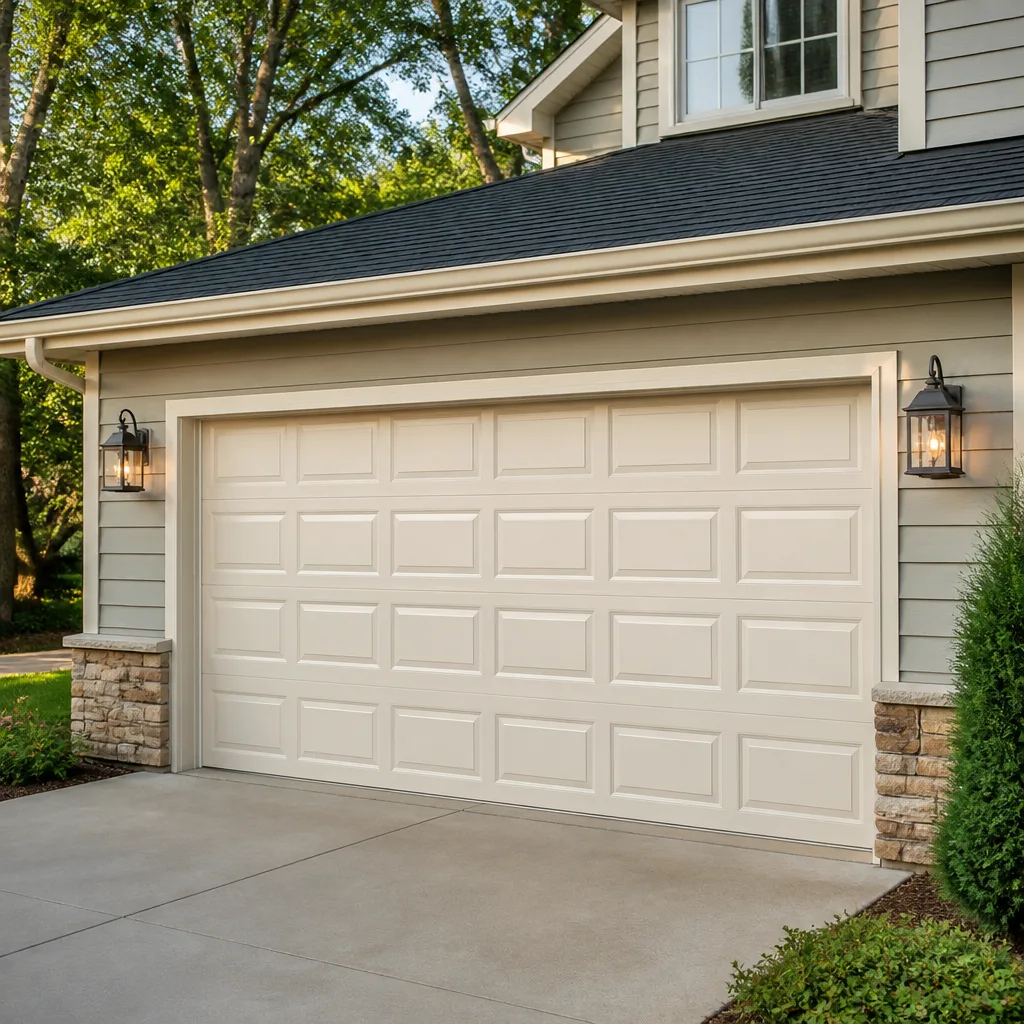 Raised-panel steel
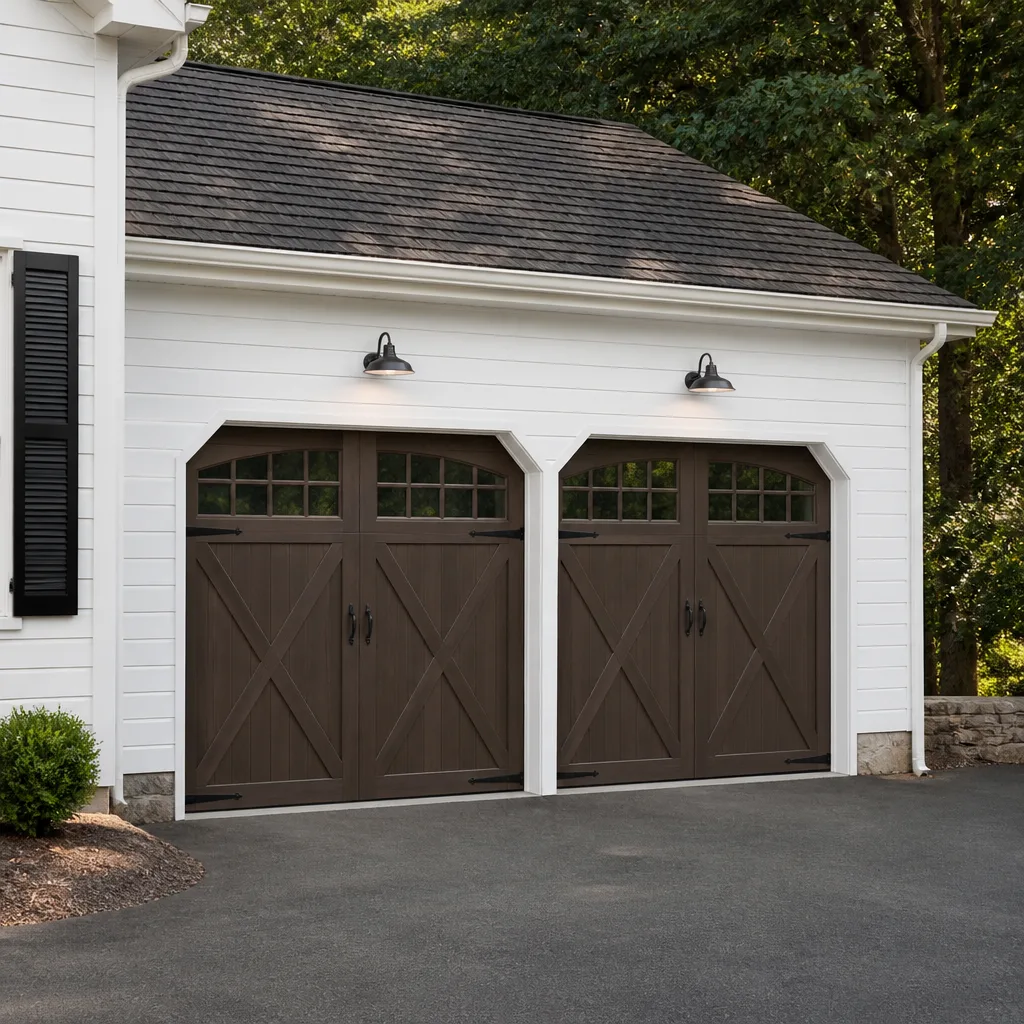 Carriage house
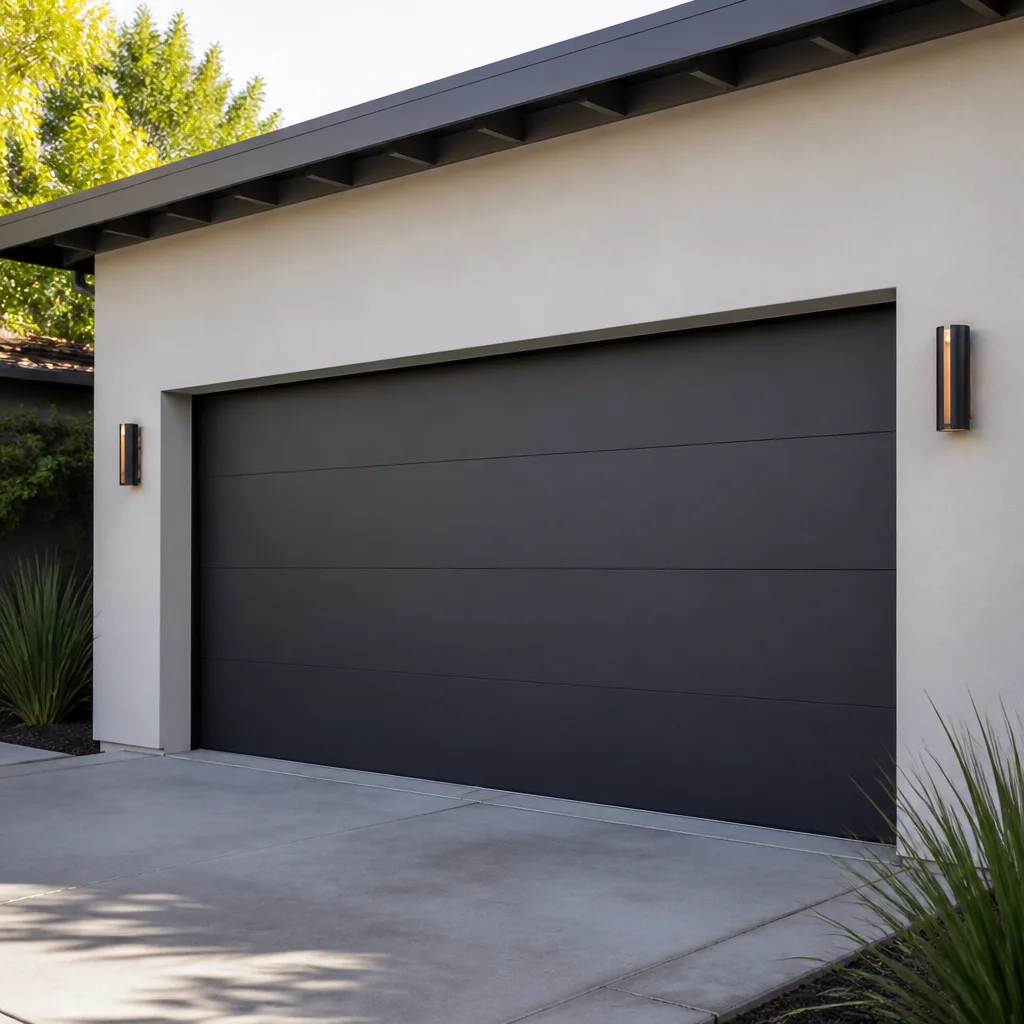 Modern flush
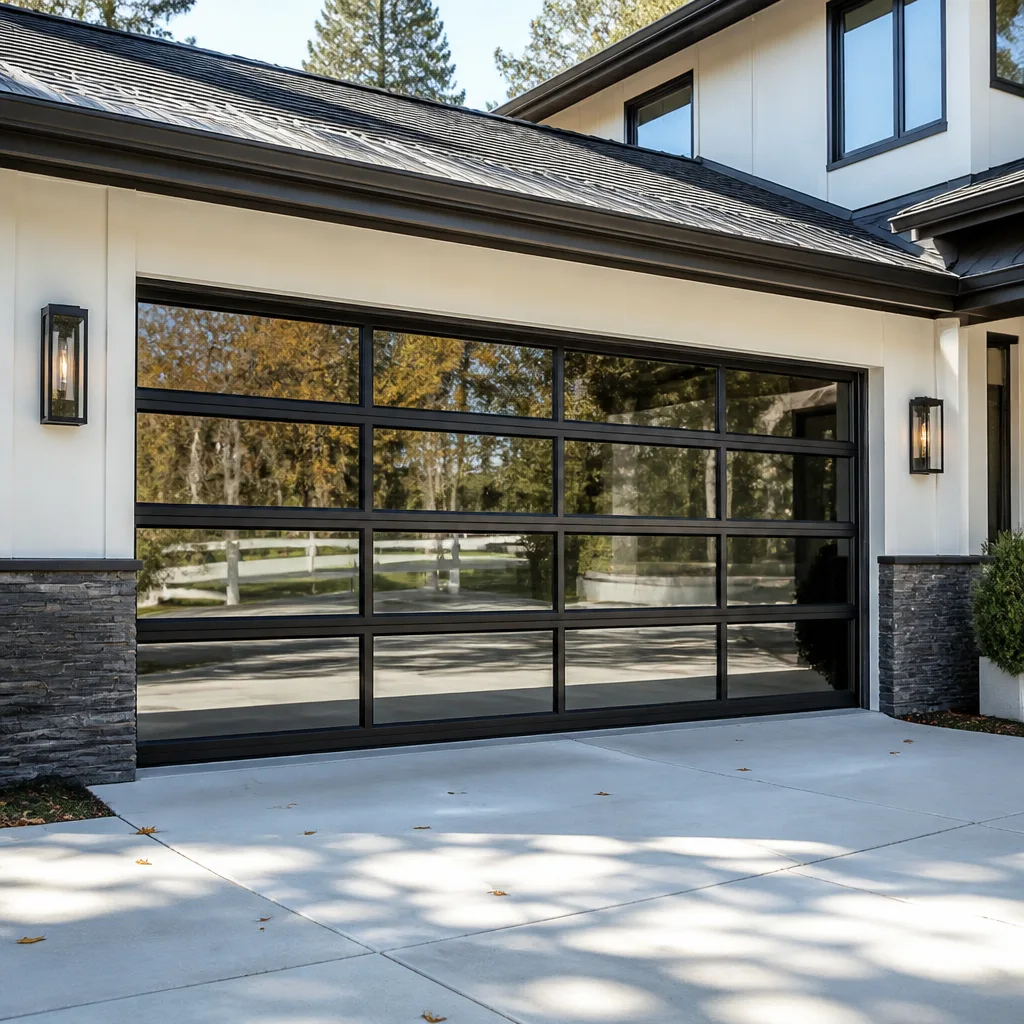 Full-view glass
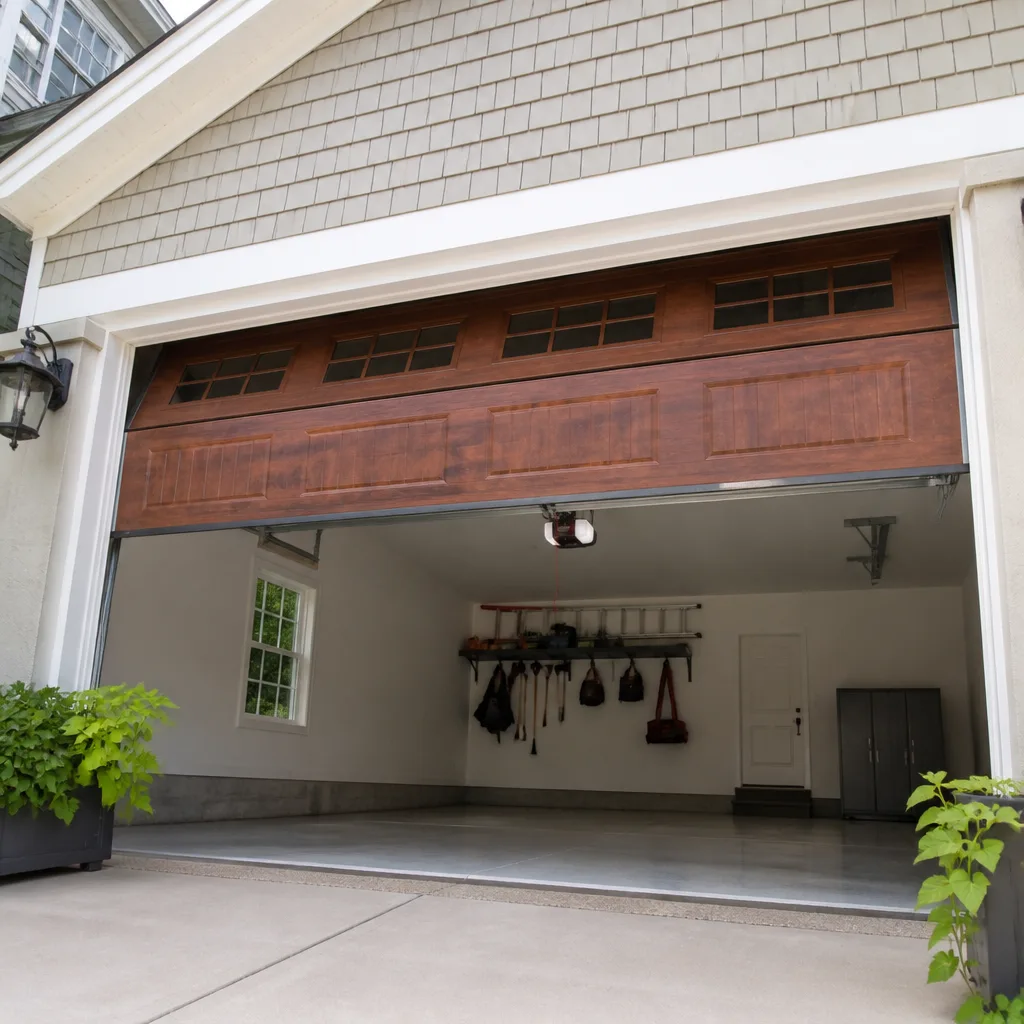 LiftMaster openers
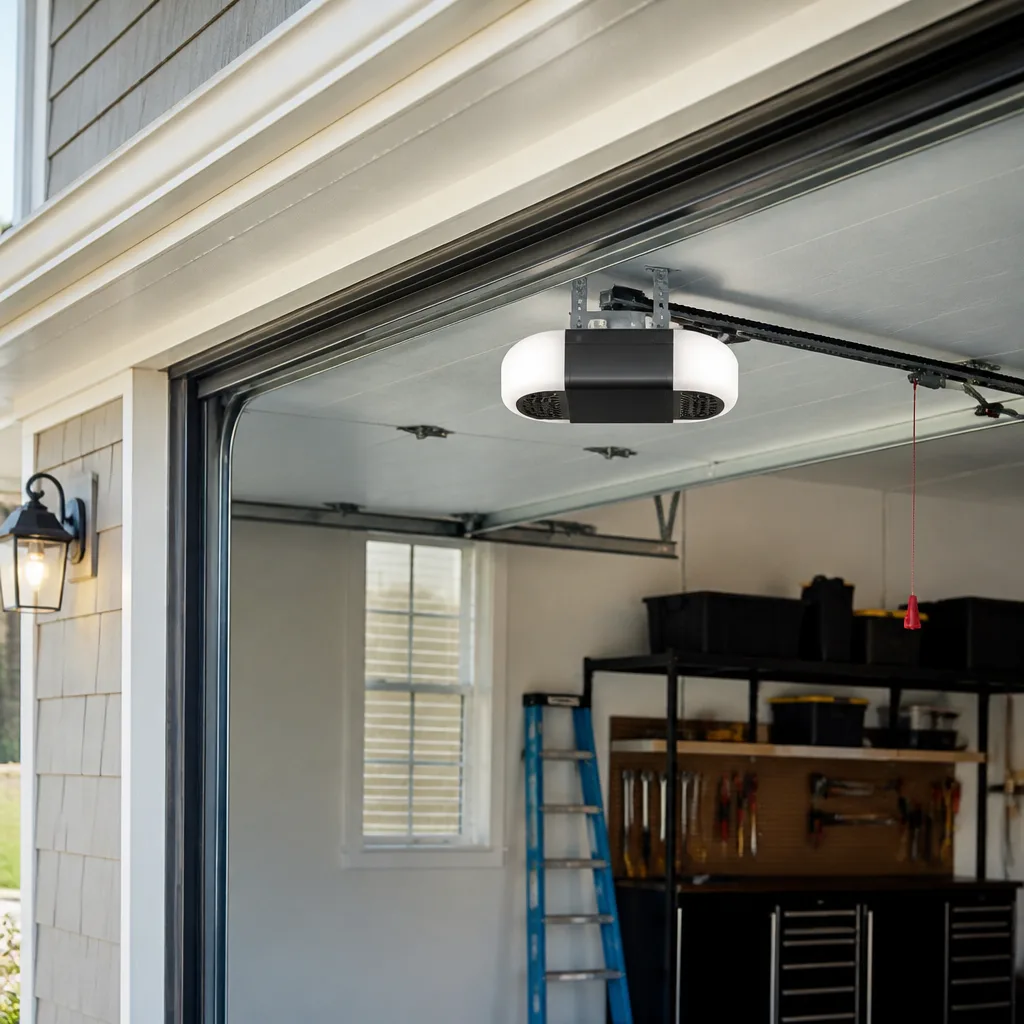 Chamberlain openers
Full 25-point door and opener safety check with every visit - springs, cables, rollers, tracks, and your LiftMaster or Chamberlain opener included
You get a price before we start. It does not change when the pro arrives.
Get your free estimateDIY vs Professional Garage Door: The Jersey City Homeowner’s Decision Guide
Most garage door advice treats “should I DIY this?” as a question about confidence. That’s the wrong frame. Plenty of homeowners in Jersey City are handy enough to swap a seal or tighten a hinge, and plenty of them should still never touch the springs. The real question is which jobs carry a risk that’s out of proportion to the effort involved – a risk that a single mistake turns a $200 repair into a full door replacement or a trip to the emergency room. This guide draws a hard line between the tasks that are genuinely DIY-safe and the ones that a trained technician should handle. You’ll get a definitive task list, the tools worth buying, how to spot a bad previous repair, and what New Jersey permits mean for a self-installed opener.
Quick Answer
Safely DIY-able garage door jobs are limited to the low-energy, low-tension parts: the bottom seal, hinges, rollers, the photo-eye alignment, and remote or keypad programming. Anything involving torsion springs, extension springs, cables, the counterbalance system, or the track alignment of a door that has come off its rollers is a professional job. The dividing line isn’t skill – it’s stored energy and structural load, and a mistake there can injure you or destroy the door.
Styles & brands we work with
- Raised-panel steel
- Carriage house
- Modern flush
- Full-view glass
- LiftMaster openers
- Chamberlain openers
Table of Contents
- Where the DIY Line Actually Sits
- The Definitive DIY-Safe vs Professional Task List
- Why Springs and Cables Are Not a Skill Question
- Tools a Homeowner Actually Needs (And When Buying Them Costs More)
- Why a Failed DIY Install Costs More in Jersey City
- How to Tell a Previous DIY Repair Is Causing Your Problem
- New Jersey Permits and DIY Opener Installation
- Knowing Your Brand Before You Decide
Where the DIY Line Actually Sits
The line is not drawn by how complicated a task looks. It’s drawn by how much energy the part stores while you’re working on it. A bottom seal holds no energy – you pull the old rubber out of its channel and slide a new one in. A torsion spring holds enough stored force to break a wrist, and it stays loaded the entire time you’re near it. Those two jobs sit at opposite ends of the same door, and treating them as the same kind of project is where homeowners get hurt.
Everything on a garage door falls into one of three buckets. The first is low-energy parts you can swap with basic tools and no special training. The second is high-energy components – springs, cables, the counterbalance system – where the stored force makes any mistake dangerous, regardless of how careful you are. The third is electrical or safety-system work on the opener, which is where building code and permits come in.
Most garage door failures in Jersey City we diagnose split cleanly along those buckets. A door that’s noisy but opens fine is almost always a bucket-one problem: worn rollers, a dry hinge, a split seal letting in cold air. A door that slams down, won’t stay up, or drifts halfway is a bucket-two problem, and that’s not a repair to attempt with a wrench and a video. Knowing which bucket you’re in before you pick up a tool is the whole decision.
In our experience, the homeowners who get into trouble are rarely reckless. They’re methodical people who fixed their own sink and figured a garage door was similar. It isn’t, because a sink doesn’t store force that releases the moment a cable slips.
The Definitive DIY-Safe vs Professional Task List
Here’s the list we’d hand any homeowner who asked. If your job is on the left, go ahead – it’s within reach with a Saturday and a few tools. If it’s on the right, book a technician, because the risk isn’t proportional to the effort.
Safe to DIY
- Bottom seal replacement. The rubber weather seal along the bottom of the door. Pull the old one out of its channel, slide a new one in, trim to length. No stored energy involved.
- Hinge and roller replacement on the door sections. With the door fully down and unplugged, worn hinges and rollers swap out with hand tools. Never do this with the door up or the opener engaged.
- Lubricating hinges, rollers, and the track. A garage-door-rated lubricant quiets most squeaks. Don’t grease the track surface itself – keep it clean, not slick.
- Photo-eye alignment. The two small sensors near the floor on each side. If the door reverses on its own, the eyes are often misaligned or blocked by a broom, a recycling bin, or a parked bike. Straightening them is a homeowner task.
- Remote and keypad programming. Pairing a new remote or resetting a keypad code is a follow-the-manual job, no tools required.
- Cleaning and inspecting. Wiping down the track, checking the door for loose bolts, listening for new sounds – all safe and all useful.
- Replacing the opener’s light bulbs and battery backup. Straightforward and low-risk.
Professional only
- Torsion spring repair or replacement. The spring above the door that does the actual lifting. It’s under high tension at all times.
- Extension spring repair. The springs that run along the horizontal tracks. Same danger, different geometry.
- Cable replacement. Cables carry the spring’s force to the door. A frayed or snapped cable is a stop-and-call situation.
- Counterbalance adjustment. The whole system that keeps the door weight-neutral. Getting this wrong makes the opener work overtime and can drop the door.
- Track straightening after a door has come off its rollers. Re-seating a misaligned door requires controlling its weight, which is not a one-person job.
- Opener motor, capacitor, logic board, and gear replacement. These live inside the unit and tie into the electrical system.
- Panel replacement on a damaged section. Sections carry structural weight and must be matched to the door’s model and balance.
If your job lands on the right-hand list, that’s where our garage door repair comes in – and it’s worth saying plainly: most of the doors we look at don’t need replacing. They need the specific component that failed, fixed correctly.
Why Springs and Cables Are Not a Skill Question
We get asked, sincerely, whether a careful homeowner with a good tutorial can handle a torsion spring. The answer isn’t about care. It’s physics. A torsion spring on a standard residential door is wound to a specific number of turns to counterbalance the door’s weight. That stored energy has to be released in a controlled way, with the right winding bars and the right technique, or it releases on its own – and when it does, it releases fast.
Here’s what that means in practice:
- The spring is always loaded. It’s not like a screw you loosen gradually. Even a door that’s fully down has a spring under tension. There’s no “safe position” you can put it in from the outside.
- The failure mode is sudden, not gradual. A spring that lets go doesn’t give you a warning creak. It snaps, and anything near it – fingers, wrists, the tool you’re holding – takes the hit.
- A cable under load is just as dangerous. If a cable is frayed and you’re near the door when it goes, the door can drop on one side.
- A wrong spring is worse than a broken one. Even if you sourced the right part, a spring wound to the wrong tension throws the whole door out of balance, strains the opener, and can crack a section.
No tutorial changes that. We’re not being modest about our trade when we say this – we’re being honest about force. Our technicians have up to 11 years of experience working with these systems, and even they use winding bars, not bare hands, because care alone isn’t a safeguard against stored energy. If a spring or cable has failed, the safe move is to leave the door down, unplug the opener, and call. From there, a trained technician can make the call on whether a matched pair is the right repair. If you’re not sure which component failed, that’s a diagnostic question we’re glad to answer over the phone before you decide anything.
Tools a Homeowner Actually Needs (And When Buying Them Costs More)
Here’s a useful test for any DIY job: if the tool costs more than the repair, hire out. For garage doors, the safe tasks sit comfortably inside a basic homeowner toolkit. The unsafe tasks need tools you’ll use exactly once and should never own.
What the safe DIY tasks actually need
- A socket set and a couple of screwdrivers – enough for hinges, rollers, and fasteners.
- A utility knife for trimming a new bottom seal to length.
- A garage-door-rated lubricant – not WD-40 on the moving parts, and not grease on the track.
- A stepladder, if you’re reaching the higher hinges safely.
- A level, for checking that the photo-eyes are aligned with each other.
That’s genuinely it for the safe list. Those tools pay for themselves because you’ll use them on a hundred other things.
What the unsafe tasks need – and why you shouldn’t buy it
Winding torsion springs requires a pair of winding bars sized to the spring’s cones, and the technique to use them without letting the spring unwind. That’s not a tool a homeowner should own. It’s a professional’s tool, used daily, replaced when it wears. Buying a set for a single job means you’re holding unproven equipment next to a loaded spring – exactly the wrong place to save money.
There’s a second cost people miss. On the safe tasks, buying the tool and doing it yourself genuinely makes sense. On the unsafe ones, the money you’d “save” is dwarfed by the cost of a damaged door or an injury. When the tool costs more than the repair and the repair carries real risk, the math isn’t close. Our garage door opener repair and door repair both come as a written estimate set before any work starts, so you can compare a real number against the tool price before you decide.
Why a Failed DIY Install Costs More in Jersey City
In a suburban driveway, a botched install is an inconvenience. In Jersey City, it can be a daily problem. The dense parking reality here – narrow side streets, stacked driveways, cars parked tight against garage aprons, and the loading zones and permit-parking rules that shift through the day – means a door that won’t close properly can strand a car for hours or leave a driveway unusable until it’s fixed.
Think about what a failed install actually looks like. If a door goes up unevenly and comes off a roller, or an opener reverses at the wrong point, the symptoms don’t show up once. They show up every time someone needs to leave or come home. In neighborhoods like the Heights, Greenville, or along the Waterfront, that’s a problem for the whole household, not just the person who did the work.
There’s also the physical space to consider. A garage door needs clearance to be set up and tested, and a lot of Jersey City garages are tight – a detached garage behind a main house, a single bay carved into a basement level, a street-facing door with a car parked inches away. Getting the tracks plumb and the door balanced in a tight space is harder than it looks, and doing it wrong the first time leaves you with a door that never quite lines up.
None of this is a knock on Jersey City homes. It’s the opposite: it’s a reason to treat a garage door install here as a measured job rather than a weekend experiment. The apartment density and the parking constraints mean a failed door has more downstream cost than it would almost anywhere in the suburbs, because the fix has to happen on top of the original problem.
How to Tell a Previous DIY Repair Is Causing Your Problem
A good share of the “new” problems we’re called about in Jersey City trace back to a repair someone did before we got involved. That’s not said to shame anyone – it’s simply a pattern, and spotting it early saves you money. Before you call, run this check in a minute or two.
- Look at the fasteners. Mismatched bolts, missing screws, or hardware that doesn’t match across the hinges suggests a partial repair someone did by hand.
- Check the springs against each other. On a matched pair, both springs should have the same look, the same number of coils, and similar wear. A new spring sitting next to an old one can mean a single spring was replaced when the pair should have been. That throw the door out of balance.
- Check the track for kinks. A small bend in a track – often from a door hitting it during a repair – makes the door bind as it moves. Run your eye down each track; it should be straight.
- Test the balance. With the door unplugged and closed, lift it by hand to about waist height and let go. A properly balanced door holds roughly there. If it drops or rises, the counterbalance was set wrong or a spring is failing.
- Check the photo-eyes. Look for sensors that are crooked, taped, or blocked. A door that reverses unexpectedly or won’t close is often a safety-eye problem, sometimes from a quick realignment that didn’t hold.
- Look at the opener wiring. Loose wire nuts, wires routed outside a conduit, or a spliced cord are signs the opener was installed or repaired outside professional practice, and that’s a common cause of intermittent failures.
If any of those show up, the repair you need is often not the thing you’d guess. A door that won’t close can be a sensor, a track, a spring, or the opener’s logic – and the right fix depends on which. That’s the reason a full-system diagnosis matters more than a single part swap. Since Jasper services both the door and the drive system, we can check the mechanics and the electronics on the same visit instead of treating them as separate problems with separate contractors.
New Jersey Permits and DIY Opener Installation
Garage door openers are electrical equipment, and that’s where DIY gets complicated in New Jersey. Most cities require a permit for electrical work installed in a home, and that includes hard-wired openers. The safest thing a homeowner can do is call the Jersey City building department and ask exactly what applies to their address before any installation, because requirements vary and we won’t guess at them for you. What we can tell you is general: unpermitted electrical work is something a future home sale, a lender’s inspection, or a failed opener can surface later, and it’s far more expensive to resolve after the fact than to get right the first time.
The practical implication is simple. If you’re installing a new opener rather than repairing an existing one, that’s an install – a job that’s measured, ordered, and scheduled. It’s not a same-day repair call. You’ll want a written price before the work starts and a clear picture of what the install involves. That’s a different job from “my opener stopped working this morning,” which is a diagnostic repair we can usually handle on a same-day basis.
If you’re replacing an opener on a door that’s already struggling – binding, noisy, uneven – treat the whole system as one job. A new opener bolted onto a door with a failing spring will burn out faster than the old one did. That’s why we diagnose both the door and the drive before recommending anything, and why a repair-first approach makes more sense than defaulting to a replacement. As a Jersey City company, we’ve seen enough of these to know that the cheapest path is almost always fixing the actual failing part.
Knowing Your Brand Before You Decide
Whether you DIY or call, one thing determines how smoothly it goes: knowing the brand and model of your door and opener. This is where a lot of DIY repairs go sideways. A roller bought for the wrong door type won’t seat cleanly. A remote for the wrong opener won’t pair. A replacement spring isn’t a universal part – it’s sized to the door it lifts.
We’re factory-familiar with 8 major brands, which matters because it means we work with the actual components of your system, not a generic substitute. On the door side that includes Clopay, Amarr, Wayne Dalton, and Raynor, among others. On the drive side that includes LiftMaster, Chamberlain, Genie, and Craftsman. When you call, we can tell you whether the part you’re holding is the right one for your setup, and whether the repair you were planning is actually the repair you need.
For a homeowner deciding on the safe DIY tasks, the brand is easy to check – it’s printed on the door sections or stamped on the opener unit. For anything on the professional list, the brand is one of the first things a technician confirms, because diagnostic recommendation depends on it. Either way, it’s worth finding before you buy anything.
Common Mistakes to Avoid
- Winding a torsion spring by hand and “going slow.” The spring stores energy regardless of how carefully you move. This is the mistake that causes most garage door injuries, and no amount of patience makes it safe.
- Replacing one spring of a matched pair. A pair is designed to work together. Swapping one spring for a new one next to an old one throws the balance off and shortens the life of both.
- Buying a generic part for a branded door. Rollers, hinges, and springs are sized to the door. In a city with as many older homes as Jersey City, mismatched hardware is common – and it’s a frequent cause of a door that “just won’t run right.”
- Working on a door while the opener is plugged in. Even a door that’s “off” can be triggered. Unplug the opener and lock it out before touching any safe-DIY part.
- Assuming a door that won’t close needs a new opener. More often than not it’s the photo-eyes, a track kink, or a spring issue the opener is faithfully trying to work around. Replacing the opener without checking the door wastes money.
- Skipping the permit on a DIY opener install. Unpermitted electrical work is a future problem, and in Jersey City’s older housing stock it surfaces at the worst time. Check with the building department before you start.
- Ignoring a snapped cable because the door still lifts. A door on one functioning cable is a door waiting to fall the wrong way. Stop using it and call.
See the difference
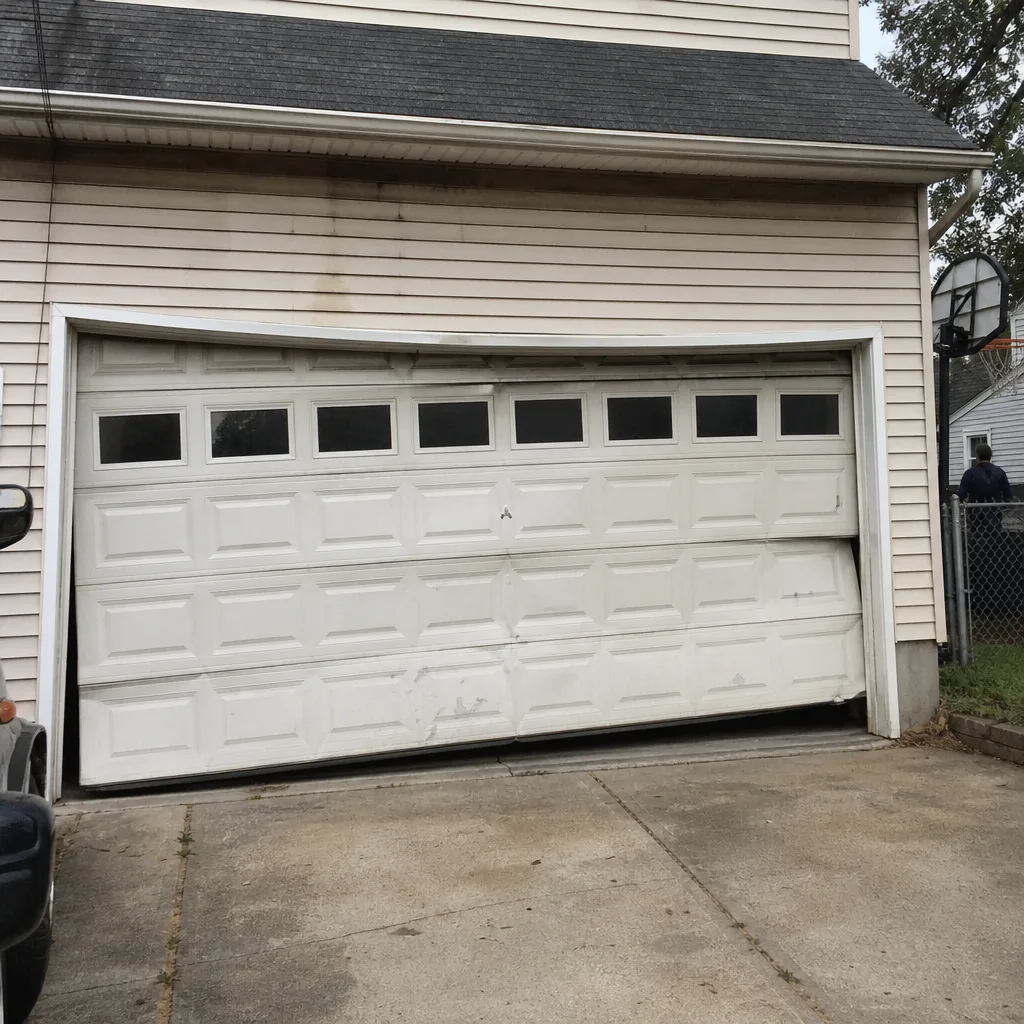 Before
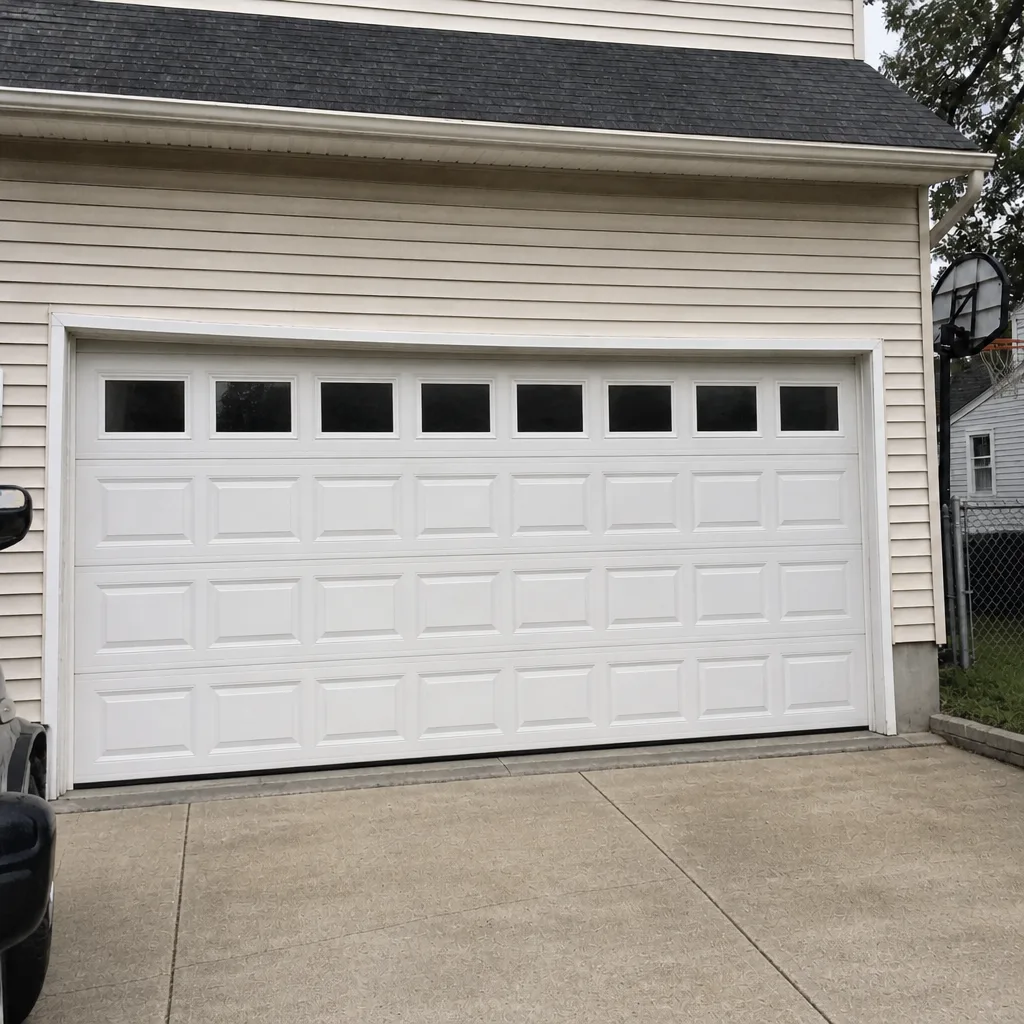 After
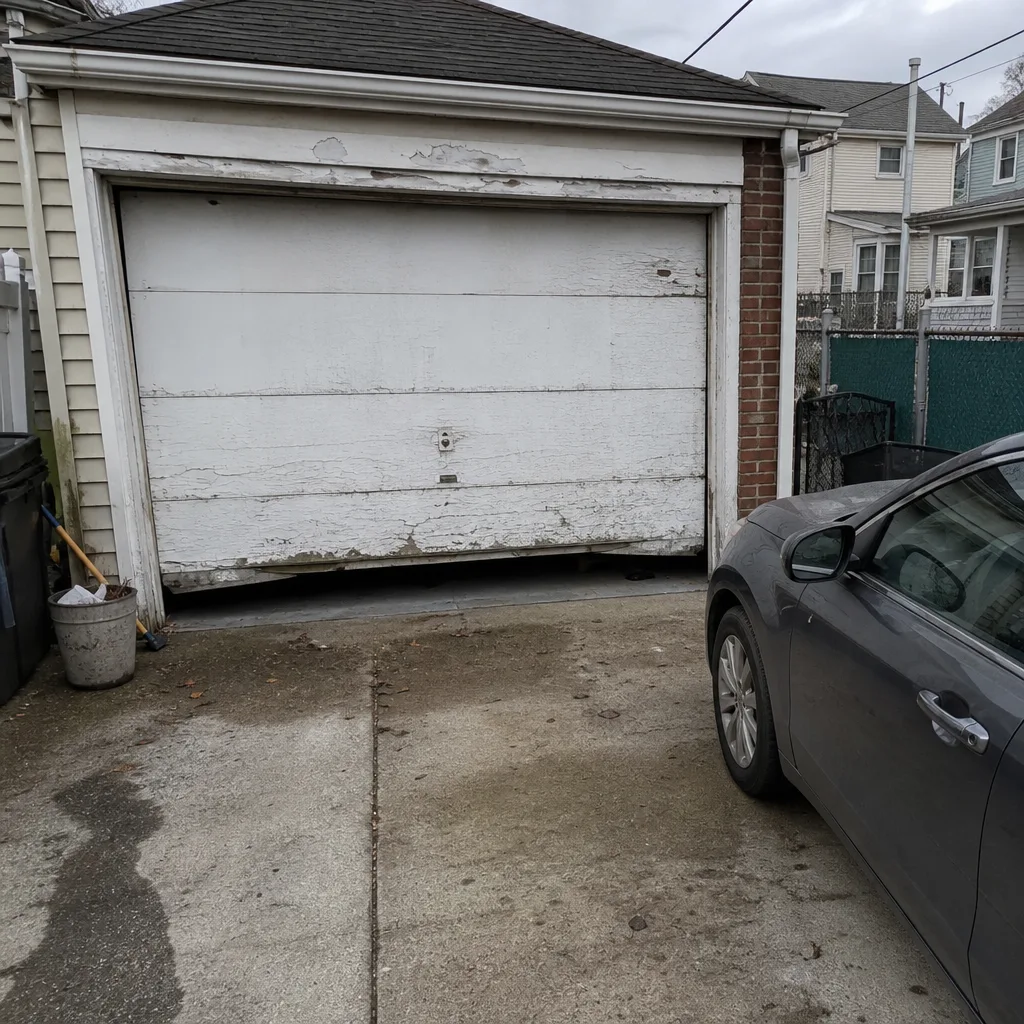 Before
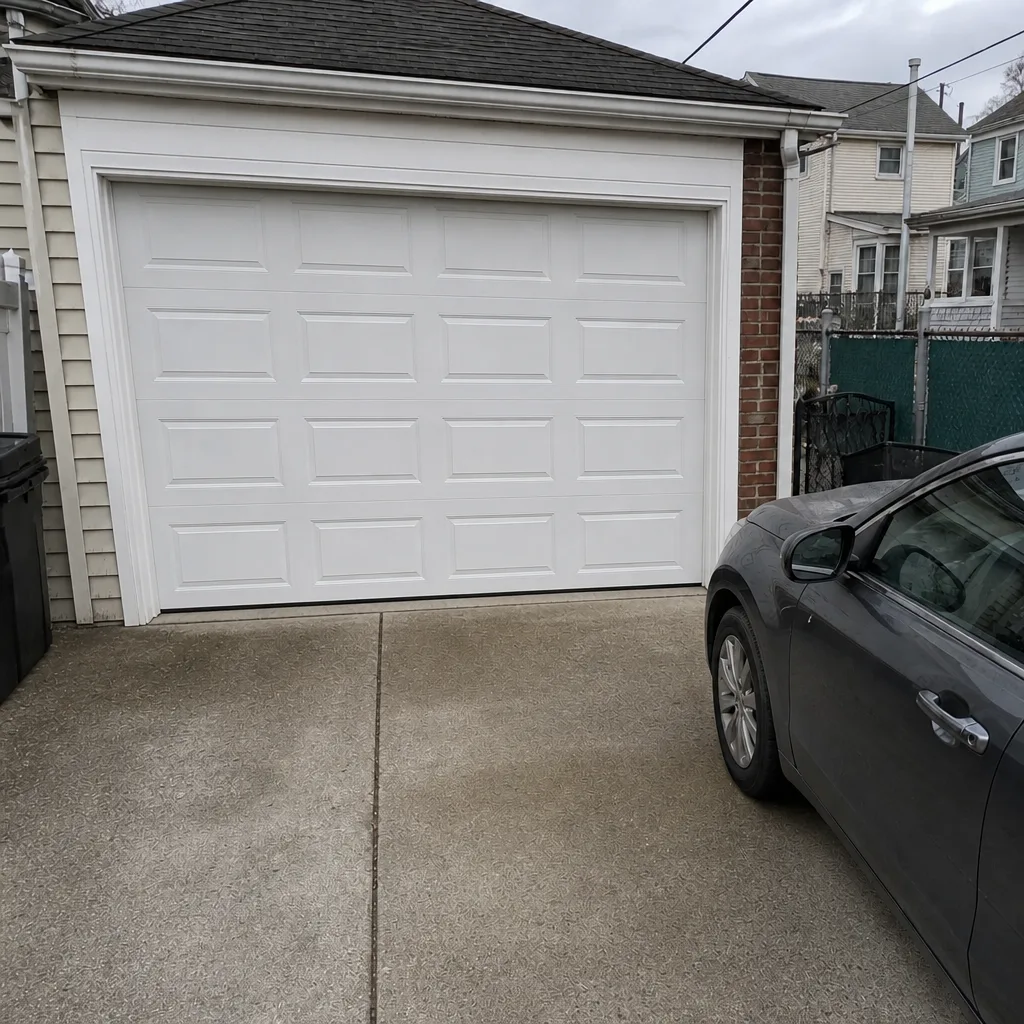 After
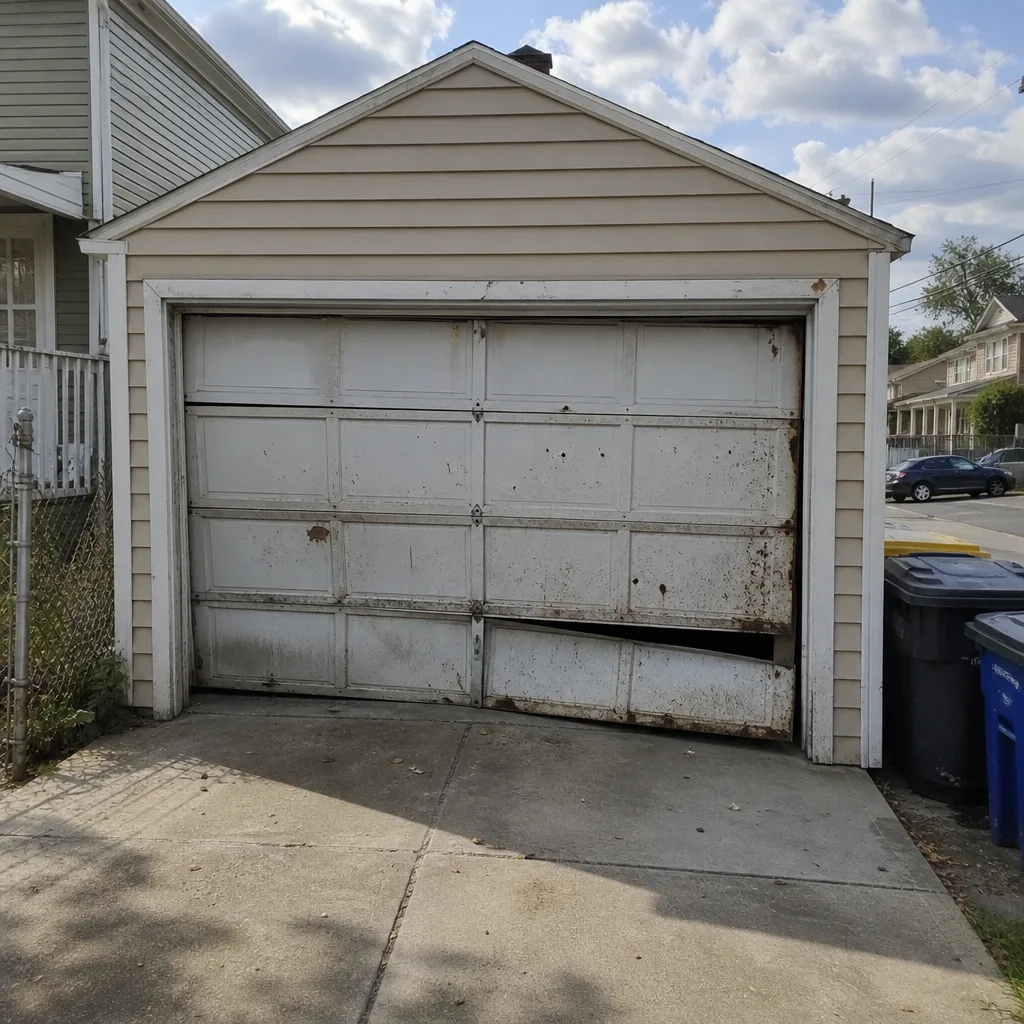 Before
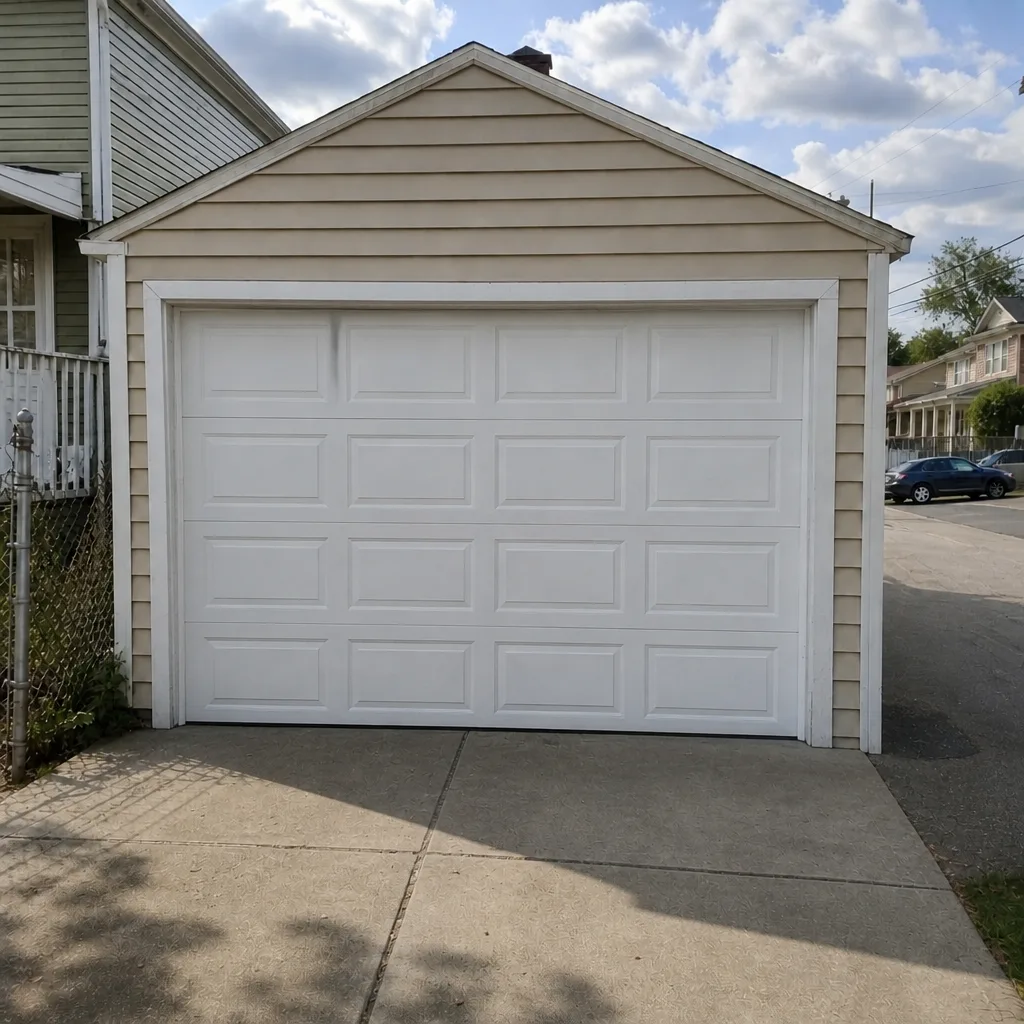 After
When to Call a Professional
Call a professional the moment your job crosses into stored energy or structural load: any spring, any cable, any door that’s come off its rollers, any opener motor or board that’s failed, and any install that needs a permit. Call right away if you hear a bang from the garage and the door won’t lift, if a cable is frayed, or if the door drops unevenly. For the safe tasks, use your judgment – if you’re unsure whether the part in front of you is the right one, that uncertainty is a good reason to stop. Jasper Garage Door Repair offers free estimates in Jersey City – call (855) 754-6007. We answer 24/7, with fast dispatch from 7am to 7pm, Sunday through Friday.
Frequently Asked Questions
No. Torsion and extension springs store enough energy to cause serious injury, and a mistake there can also damage the door structure. Replacing springs is a professional job that needs the right bars, the right technique, and a matched spring sized to your door. Everything on that part of the list should go to a trained technician. Call (855) 754-6007 for an estimate – it’s free.
The safe DIY tasks are the ones with no stored energy: replacing the bottom seal, swapping hinges and rollers with the door down and unplugged, lubricating the moving parts, aligning and cleaning the photo-eyes, and programming remotes or keypads. If the job involves a spring, a cable, the balance of the door, or an opener’s internals, call a professional. Call (855) 754-6007 if you’re unsure which side of that line you’re on.
Garage door repair in Jersey City is priced per job by a written estimate, with the final price set before any work begins. The cost depends on which component failed – a sensor realignment, a hinge and roller set, a spring pair, or a cable – and on your door’s size and brand. The estimate is free, so you can compare a real number against doing it yourself. Call (855) 754-6007 for an exact quote.
Possibly. Garage door openers are electrical equipment, and most New Jersey municipalities require a permit for electrical work in a home, which can include hard-wired openers. Requirements vary by address, so the right move is to ask the Jersey City building department directly before starting. If you’re unsure, hire the install to a technician who accounts for it. Call (855) 754-6007 with questions about your setup.
Look for mismatched hardware, a new spring sitting next to an old one, kinked or misaligned tracks, crooked or taped photo-eyes, and spliced or loose opener wiring. Then test the balance with the door unplugged and closed: lift it to waist height and let go. If it drops or rises instead of holding, the counterbalance is wrong. Bring any of those findings to a call. Call (855) 754-6007 for a full-system diagnosis, with the estimate free.
Not us. Repair is the starting point here. A failing spring, a bent track, a worn cable, or a bad opener is usually a fixable component, not a sign you need a new door, and a full diagnosis on both the door and the opener is what tells you which. If a replacement does make sense, you’ll hear it in plain terms and can decide from there. Call (855) 754-6007 to find out what your door needs.
The Bottom Line
The garage door decision guide comes down to one line: low-energy parts are safe to DIY, and stored-energy parts are not. Seals, hinges, rollers, photo-eyes, remotes, and lubrication you can handle yourself. Springs, cables, counterbalance, track re-seating, opener internals, and every install that needs a permit belong to a trained technician – not because you lack skill, but because the physical risk doesn’t respond to care. In Jersey City, the parking reality makes a failed install cost more than it would in the suburbs, and permits put opener installs squarely in the “do it right” column. If your job lands on the unsafe side, that’s where Jasper Garage Door Repair comes in. Our technicians have up to 11 years of experience, we work the brand you already own – Clopay, Amarr, LiftMaster, Chamberlain, Craftsman, and more – and we diagnose the door and the opener together so you know what you’re dealing with.
Whether you’re in the Heights, Greenville, Paulus Hook, or anywhere across Jersey City, call (855) 754-6007 for a free estimate. We answer 24/7, with fast dispatch from 7am to 7pm, Sunday through Friday, and the price is quoted and agreed before any work starts.
Written by the team at Jasper Garage Door Repair.